Plage de la Citadelle d'Ashdod et la forteresse d'Ashdod-Yam
חוף המצודה אשדוד ומצודת אשדוד-ים
About
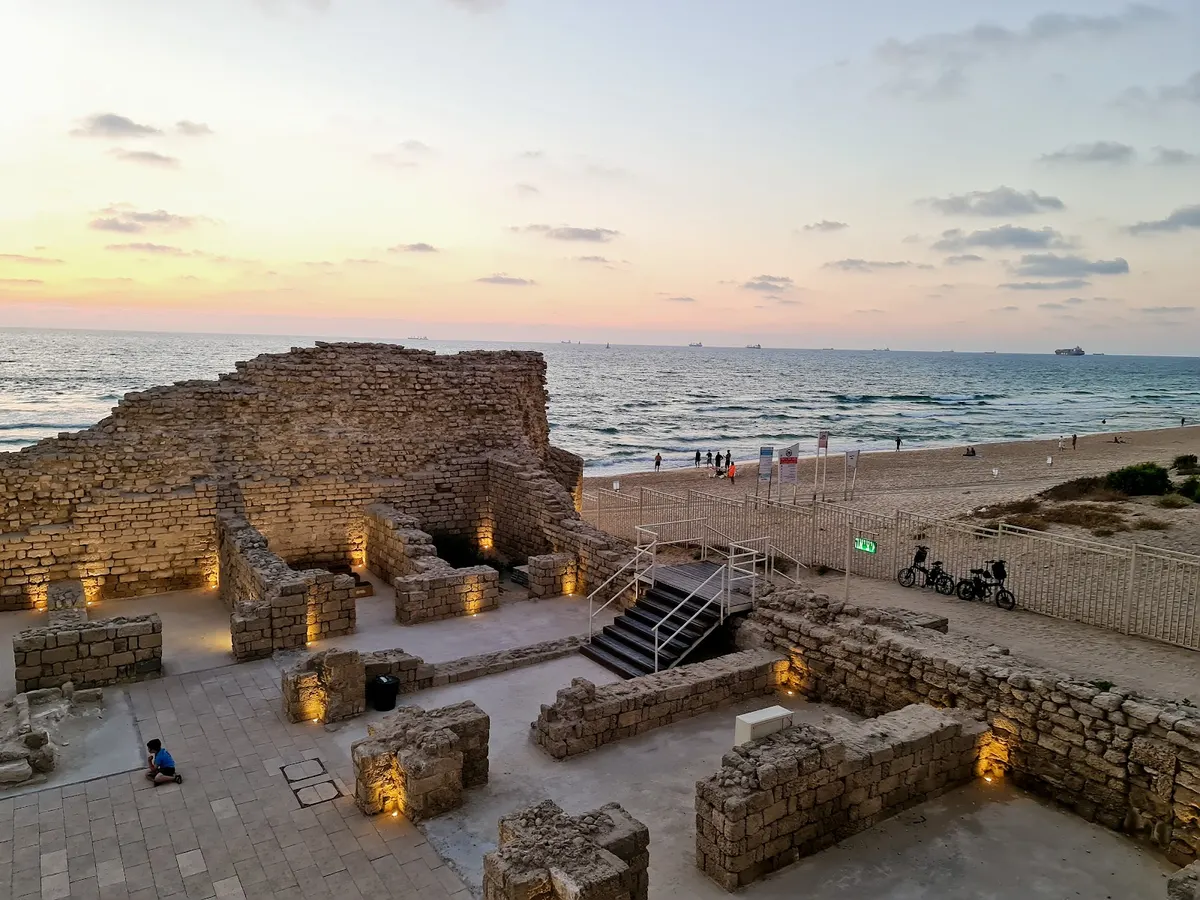
All the information about the Fortress Beach in Ashdod and the Ashdod-ים Fortress Imagine yourselves climbing the steps of an ancient fortress located on a bright-golden strip of white sea shoreline, overlooking a sea in shades of turquoise. In the distance you can see large ships. Near you, waves crash onto the shore. Beneath you are water wells, remains of a mosque, four watchtowers, horse stables, and goods storage rooms. Around the fortress are avenues of trees and vegetation typical of the high water-table areas in the region. You can see all of these—and more—at the Fortress Beach. This beach is not designated; there are no lifeguard services, and no restrooms or showers. Fortress Beach Ashdod | Photo courtesy of: Guy Yachiali Archaeological and historical site Ashdod-ים Fortress as it is seen today The fortress as seen today was built on remains from the Byzantine and Umayyad periods (early Muslim), when it served the Muslim garrison as residential quarters. In 1033 an earthquake brought down large parts of it, and it was restored during the Crusader period. The fortress was built with local kurkar (limestone) stone. What was here? Water wells, four watchtowers, a second floor—which can be reached via the steps that remain in place. In the residential level there were also horse stables and large warehouses for goods. Around the fortress there was an enclosing wall that protected the fortress, with a deep moat that confined it on three sides. The location of the fortress was strategic in several respects. This can be learned from the Madaba map—a mosaic map from the sixth century CE discovered in the city of Madaba in Jordan. The map depicts all the events/capitals of the Land of Israel in the Byzantine period, including Ashdod. There you can see that the fortress area was considered a thriving city with a pier and quay, and steps leading to houses—and even to structures with columns, indicating trade. The proximity to the seashore and the commerce that took place there made it easy for those living in the fortress to stock up on food and supplies. The lookouts who stood in the watchtowers could give warning of an approaching danger. When the Byzantine ships neared the shore, they set fire in the fortress in the designated area. This was the signal for transferring the information about the approaching danger, which reached as far as Ramla. The renovations and refurbishment of the Ashdod fortress in mid-2020 were completed, including restoration of the fortress structure. At the entrance to the site and throughout the fortress there are information stations that tell the history of the place. As night falls, the fortress is lit with special nighttime lighting, giving the ancient structure a unique and spectacular appearance. Climbing up to the "Floating" terrace on the second floor will give you a breathtaking view of the sea, the nearby ecological park, and this golden shoreline strip. The fortress is open to the public free of charge every day of the week, from 9:00–22:00. During the renovation works, the fortress was made accessible for people with physical limitations. Get a glimpse of the fortress these days: How do you get there? You can reach the Fortress Beach via an access road connecting Moshe Dayan Boulevard, Peace Square, and the beach. Parking on site is free.
Tags
More activities in Ashdod
Need help planning your activities?
Our French-speaking team helps you plan your stay in Israel, with personal advice, reservations and transfers.