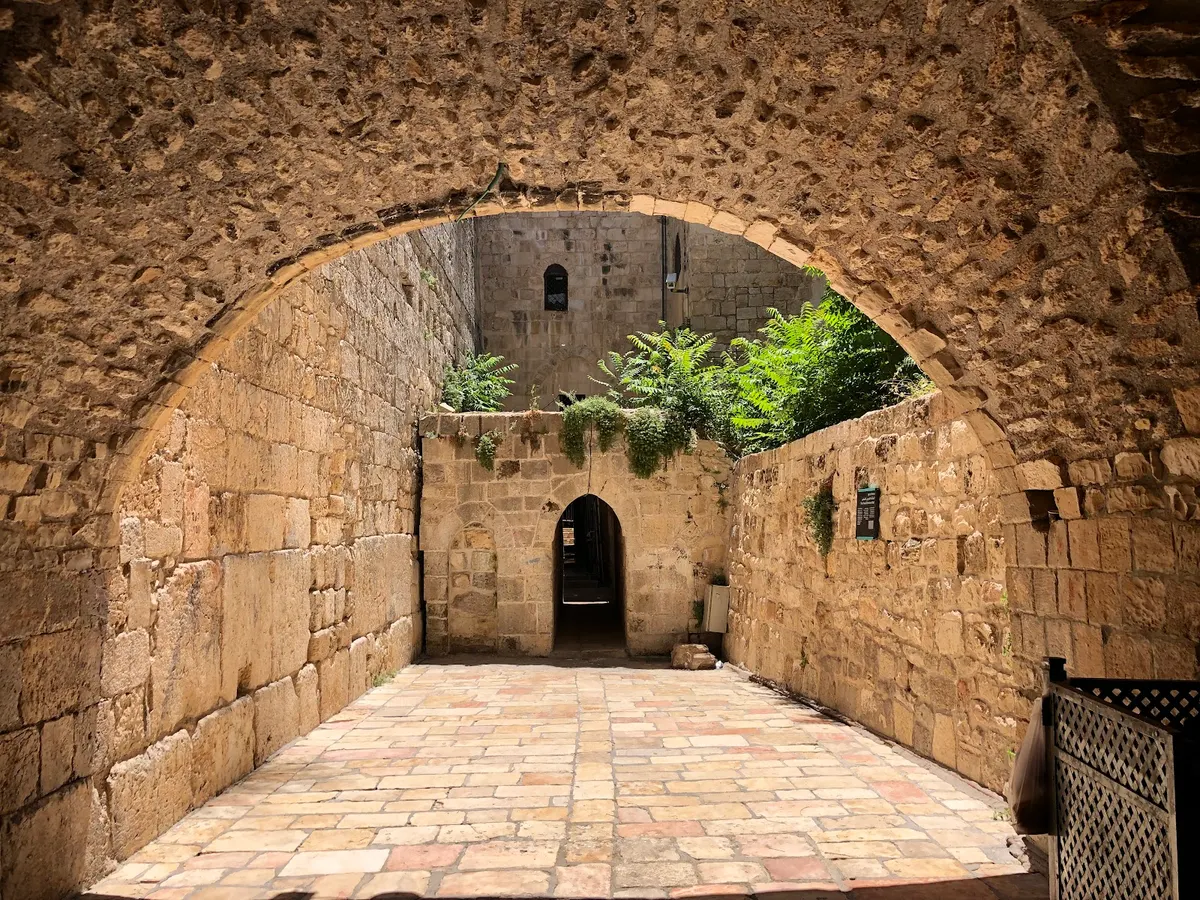
Parcourez les quatre quartiers de la Vieille Ville : Juif, Chrétien, Musulman et Arménien. Du Mur des Lamentations au Saint-Sépulcre, en passant par le Dôme du Rocher. 3 000 ans d'histoire concentrés dans 1 km².
Mur des LamentationsSaint-SépulcreVia DolorosaSouk historique
Insider tip
Commencez par la Porte de Jaffa tôt le matin (7h) pour éviter la foule. Portez des chaussures confortables et couvrez vos épaules pour les lieux saints.
Promenade dans l'un des plus anciens ports du monde. Ruelles pavées, galeries d'art, vue panoramique sur la Méditerranée et Tel Aviv. Le marché aux puces de Jaffa est un paradis pour les chineurs.
Port historiqueGaleries d'artVue panoramiqueMarché aux puces
Insider tip
Visitez au coucher du soleil pour des photos inoubliables. Le restaurant Uri Buri à proximité est parfait pour un dîner de poissons frais.
Le plus beau point de vue sur Jérusalem. Panorama à 360° sur la Vieille Ville, le Dôme du Rocher et le cimetière juif le plus ancien au monde. Descente à pied jusqu'au Jardin de Gethsémani.
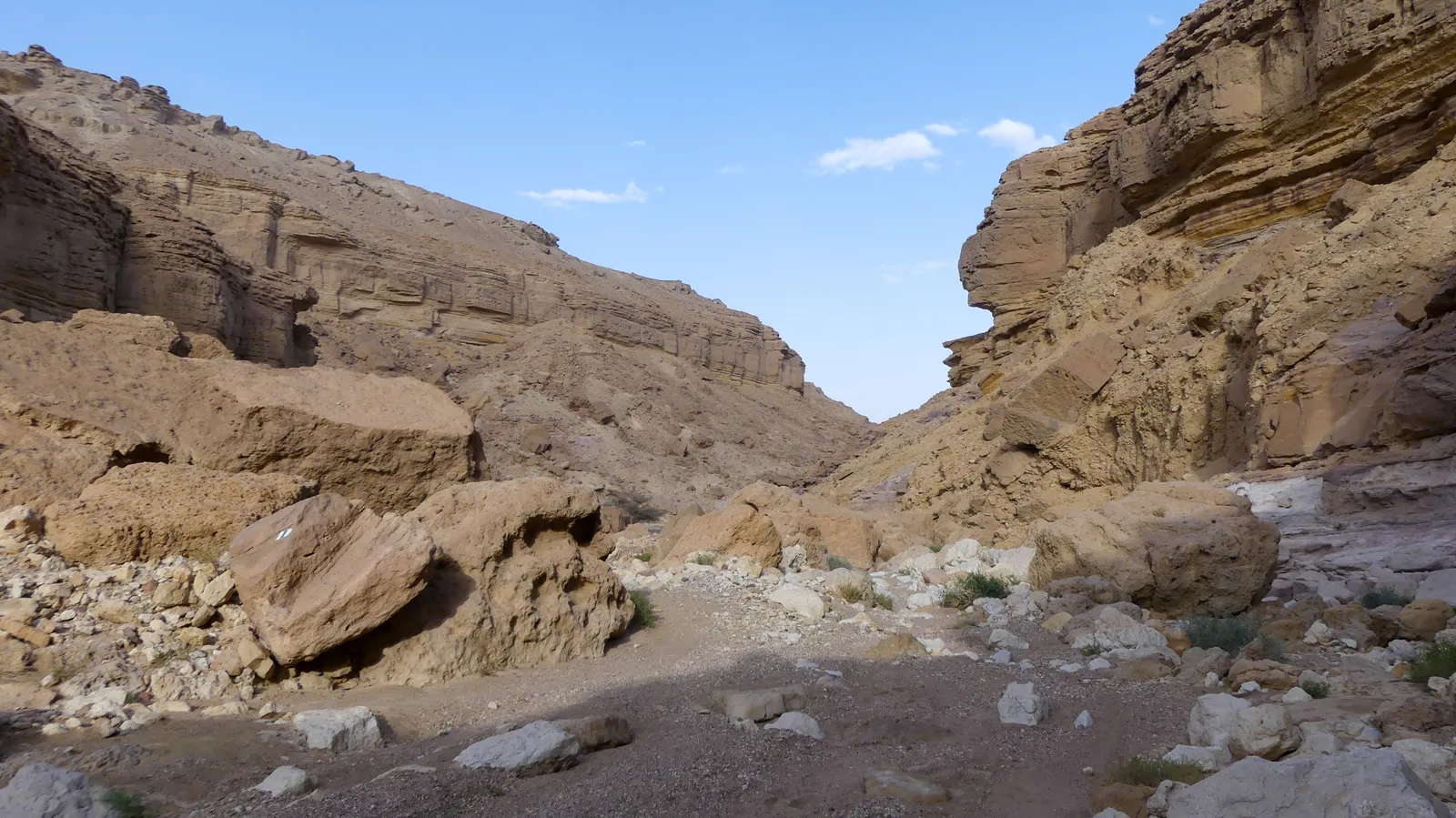
Canyon spectaculaire aux parois rouges et orangées à 20 minutes d'Eilat. Parcours de randonnée avec passages entre les rochers, échelles et ponts suspendus. L'un des sites naturels les plus photogéniques d'Israël.
Parois coloréesParcours aventureÉchelles et pontsPhotos spectaculaires
Insider tip
Partez à 7h en été pour éviter la chaleur intense. Apportez minimum 2 litres d'eau par personne et des chaussures fermées obligatoires.
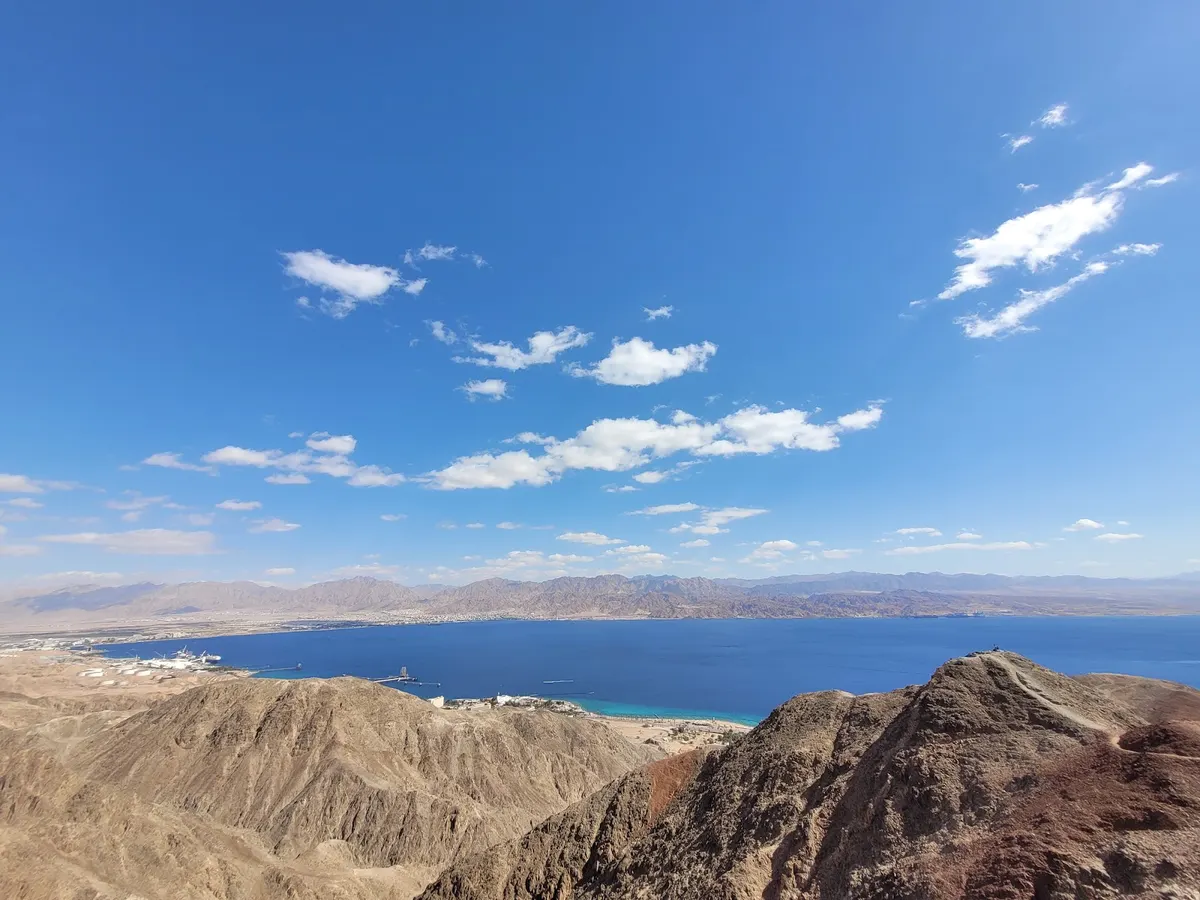
Lieu unique où se rencontrent les frontières d'Israël, de la Jordanie et de l'Égypte. Vue spectaculaire sur Aqaba (Jordanie) et Taba (Égypte). Coucher de soleil sur les montagnes d'Édom absolument magique.
3 pays visiblesCoucher de soleilMontagnes d'ÉdomPoint photo unique
Insider tip
Venez 30 minutes avant le coucher du soleil. Apportez un pique-nique et profitez du spectacle gratuit le plus impressionnant d'Eilat.
All the information about the Children of Nature Farm The Children of Nature Farm is not just another animal corner, but one that brings the wondrous world of exotic animals to the forefront. They live alongside a wide variety of animals such as rabbits, guinea pigs, parrots, ferrets, farm animals, and turtles as well. On Saturdays, guided tours are held on site that will open a new window for you into the world of reptiles. And of course, you're invited to enjoy the petting corner. There are also shaded seating areas, plaster crafting, baking pita in a taboon oven, a shop with equipment and animal food, and a cafeteria.
גני חיות / פינות ליטוף בחולון, פתח תקווה וגוש דןאטרקציות בטבע בחולון, פתח תקווה וגוש דןאטרקציות לקבוצות ואירועים בחולון, פתח תקווה וגוש דןגני חיות / פינות ליטוף
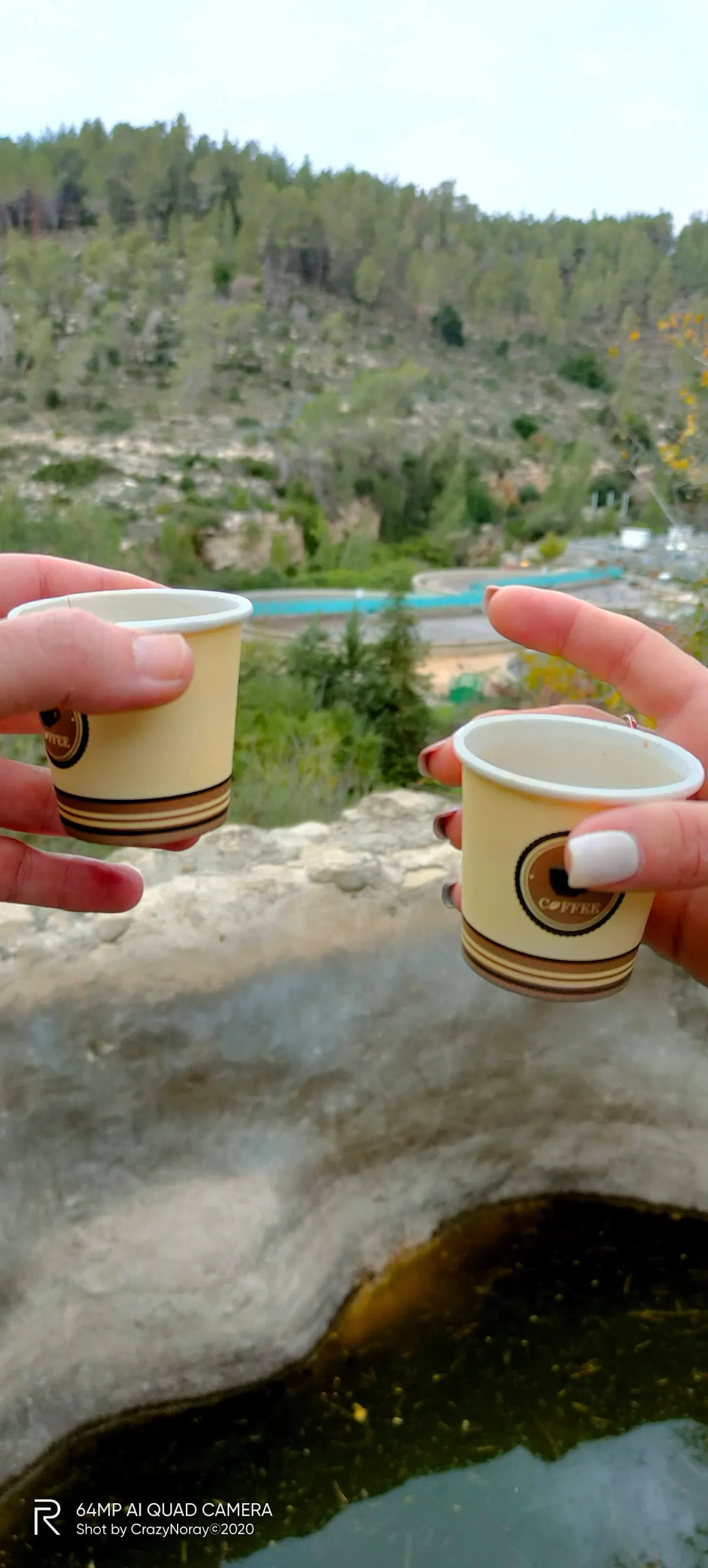
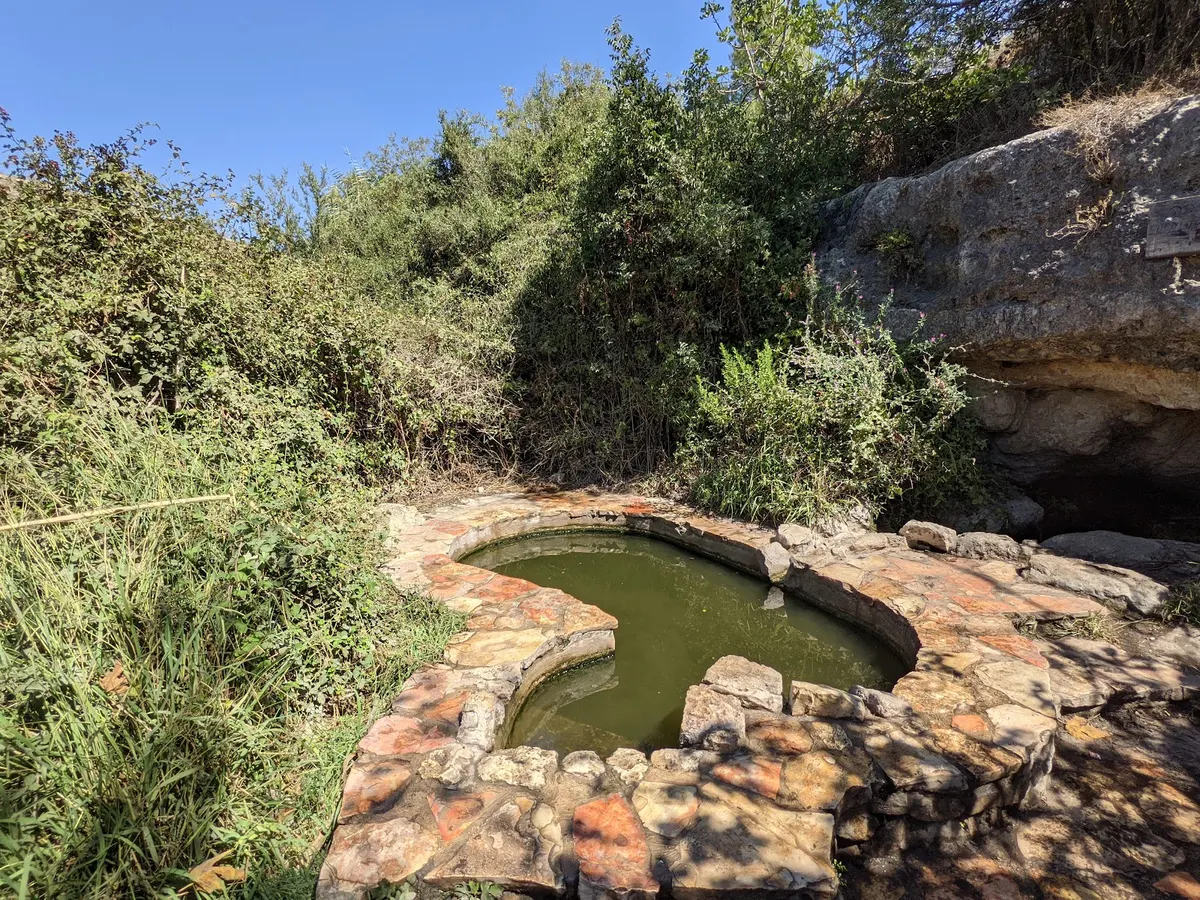
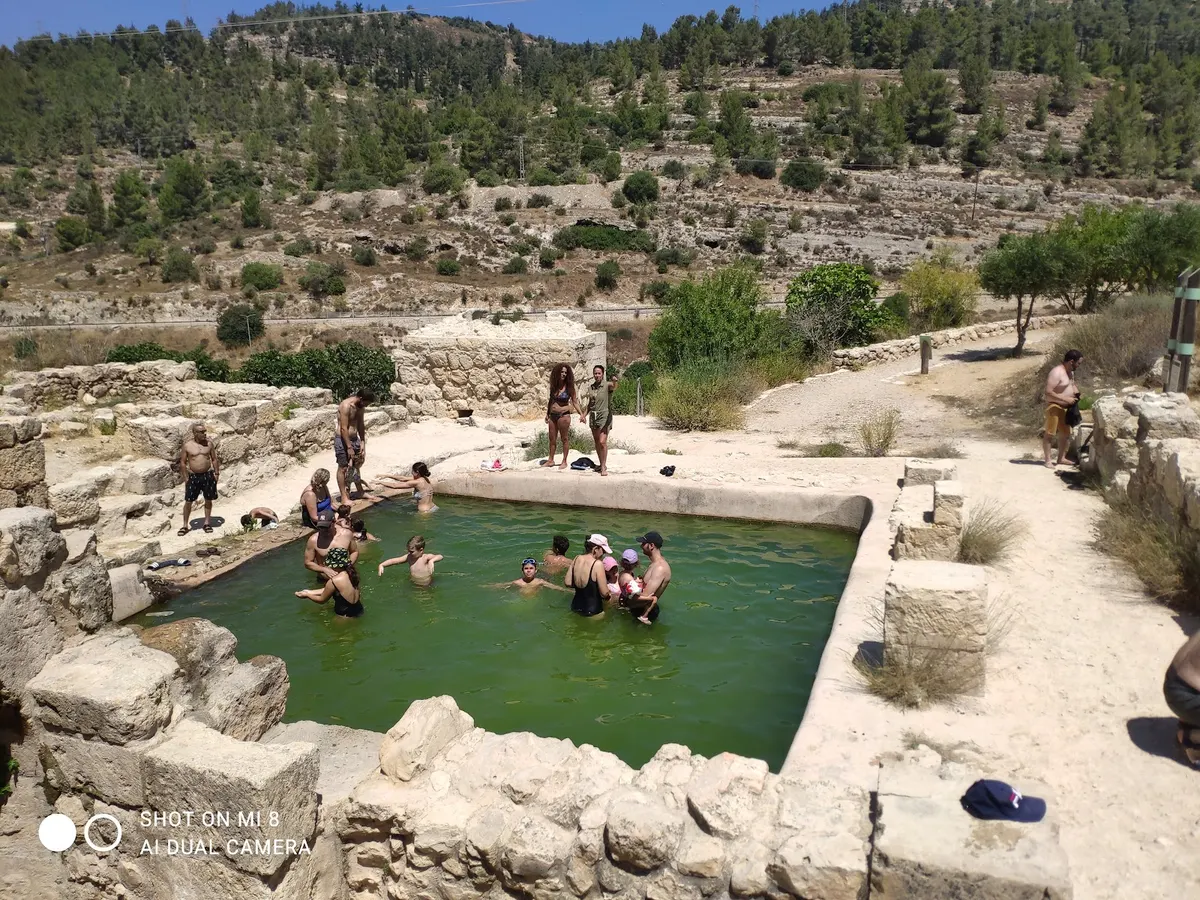
All information about Ein Yael, updated as of 12.6.17: There are no water sources in the spring. Inside a low water reservoir, an amazing spring awaits you with plenty of cool water, an amazing view, and a perfect place for a coffee set. The spring's source is actually in a structure nearby, and a pipe leads from it to the water tower, which is about 2 meters high. With the help of a tree it is possible to climb onto the flat roof of the tower, where there is an opening with a ladder that can be used to climb down inside. The water inside the water tower is exceptionally cold and clear. The path to the spring and its surroundings are full of greenery (mainly raspberry bushes), and from the roof of the tower there is an amazing view of the green wadi.
נקודות עניין מעיין / מקור מים בהרי ירושלים ואזור בית שמשנקודות עניין מעיין / מקור מיםנקודות עניין: טבענקודות עניין: מעיין
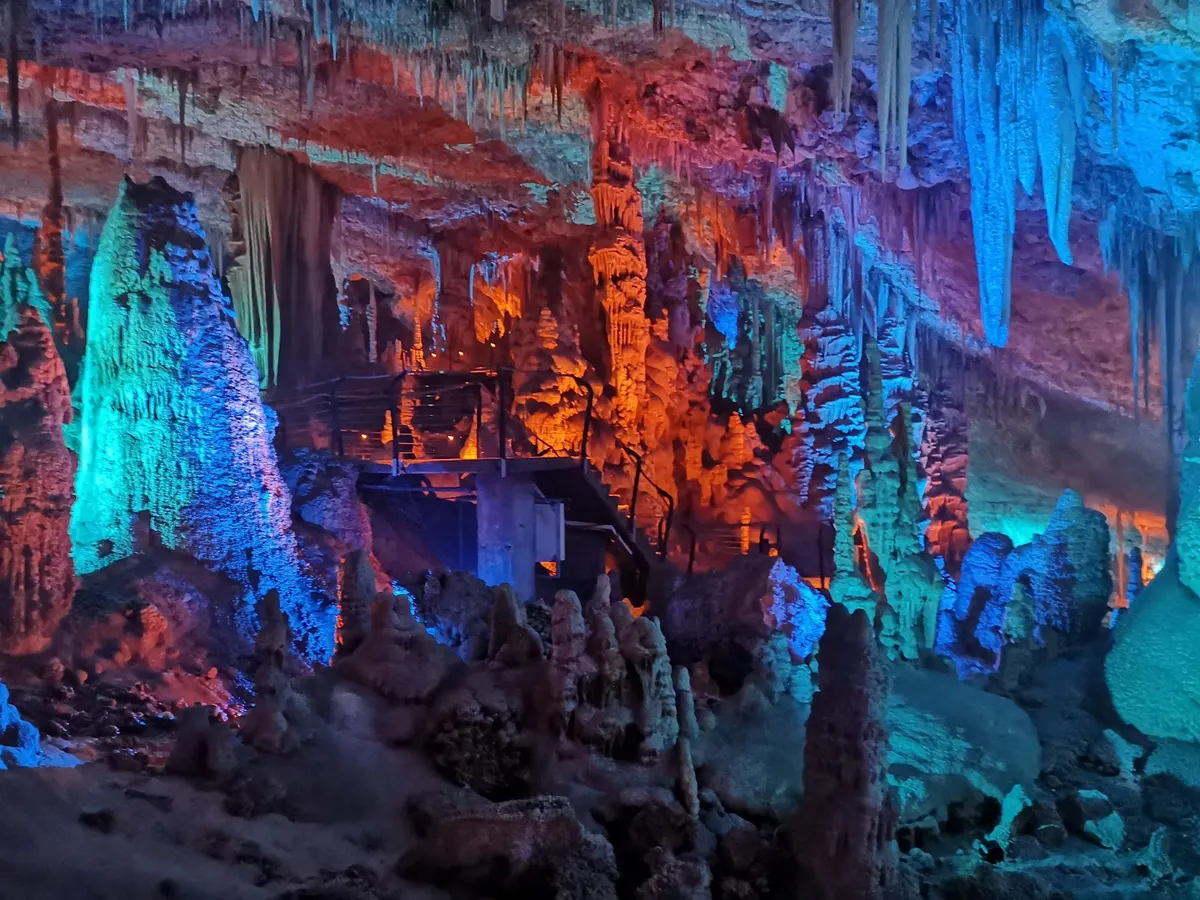
All information about the stalactite cave – Ma'arat Shorok. To enter the site, it is recommended to book a visit in advance on the Israel Nature and Parks Authority website; otherwise, entry will be based on available space. Please note: the stalactite cave tour is self-guided and includes a film, with no guiding. A mask is required. Ma'arat Shorok is an impressive stalactite cave in the Jerusalem Hills region. The cave, located at the heart of the Avshalom Shoham Nature Reserve, was named in memory of Avshalom Shoham, who was injured during his service in the Shaked reconnaissance unit and passed away on 4.2.74. The cave has existed for millions of years, but only in 1968, when workers from the Har Tov quarry blasted the limestone in the area to supply gravel for construction, the entrance to the impressive cave was discovered. Even today, you can see the quarries from the cave entrance. Stalactites and stalagmites are karst phenomena, meaning phenomena caused by the dissolving of limestone by water. This dissolving process continues for millions of years, yet it creates breathtaking shapes. The tour will reveal to you the beauty and power of nature, and among the stalagmites and stalactites you can imagine whipped-cream cakes, little cabbages, Snow White and the Seven Dwarfs, the wicked witch, and more. Perhaps the most charming are actually Romeo and Juliet—a pair of a stalactite and a stalagmite that, over millions of years, grow closer to one another yet still do not touch. If you look closely, you can see that water is still dripping from the stalactite, so maybe in one hundred years the gap will close… The cave tour is guided by a guide on behalf of the Israel Nature and Parks Authority only. The tour will begin with the film explaining the formation of stalactite caves, and then continue into the cave via a path installed inside it to minimize damage. In the summer of 2012, the lighting in the cave was upgraded and installed with colorful and impressive illumination, which also does not heat the cave. Travel back in time on a 4X4 trip in the Jerusalem Hills—an historical route between dirt roads and outposts, down the slopes of the Jerusalem Hills—this is a borma route for details and route viewing. Useful information Opening hours: Summer time: Sunday–Thursday and Saturday: 8:00–17:00 | Friday and eve of a holiday: 8:00–16:00 Winter time: Sunday–Thursday and Saturday: 8:00–16:00 | Friday and eve of a holiday: 8:00–15:00 Tour duration: about 45 minutes | Please note: entry to the reserve closes one hour before the reserve closes. Prices: Adult: 28 ₪ | Child or senior citizen (with proof): 14 ₪ Accessibility: There is access for people with disabilities to the cave | No need to bring flashlights. Two legends about the stalactites Legend One: Long ago, in a faraway land, there lived a beautiful princess. One day, the king decided that she should marry, and he sent messengers throughout the kingdom to bring the news. The next day, a large group of dignitaries arrived—dukes, important ministers, princes, and very wealthy men—all wishing to marry the princess. They brought gifts and presents galore, but the princess fell ill from them all. Her heart was captured by a handsome youth who worked in the palace courtyard. Of course, that could not happen—how could a princess marry a simple boy, the son of a palace shoemaker? Their love was great, and the princess refused to marry anyone else. Her father became very angry and decided to separate his daughter from the young man and punish her. So he built a large tower with a spire and locked her in a small room at the top. The princess's heart broke as she longed for the youth. She sat by the window and cried bitterly. The youth, sitting beneath the tower, drank in her tears hungrily. The king would not give up and left her imprisoned in the tower. The princess cried, and the youth swallowed her tears—thus, over the years, they grew closer to one another, and perhaps one day they will meet. The princess descends, slowly, following her tears, and the youth climbs higher from the tears he is swallowing. Legend Two: A karst tale. A spoiled young girl from a rich household who wished to be the most beautiful girl in the world. While traveling in this area, she met a very powerful sorcerer who disguised himself as a poor wretch and asked her for some food and warm clothing. But Karstі, who was very self-centered and inconsiderate, laughed at him and went on her way. Later, she met the sorcerer again, this time disguised as a rich and handsome prince, and immediately turned to him and greeted him politely. While they were talking, the sorcerer-prince asked her what she would want more than anything else in the world. Karstі answered: to be the most beautiful in all the land. The prince turned back into a sorcerer and said: Since your soul within is so black and ugly, I will make your outward appearance like it. Indeed, Karstі became a girl who squints, with an eagle-like nose and thin, pursed lips; in her mouth she had a tooth—yes, a tooth—no; her legs were crooked, and her entire body lacked proportion. Out of sheer shame, Karstі hid in a cave and began pleading with the sorcerer to turn her into stone. The magician yielded to her pleas and turned her into stone. Since then and to this day, there are karst caves with an upper tooth (a stalactite) and a lower tooth (a stalagmite).
נקודות עניין נקודת חן בטבע בהרי ירושלים ואזור בית שמשנקודות עניין נקודת חן בטבענקודות עניין: טבענקודות עניין: לילדים
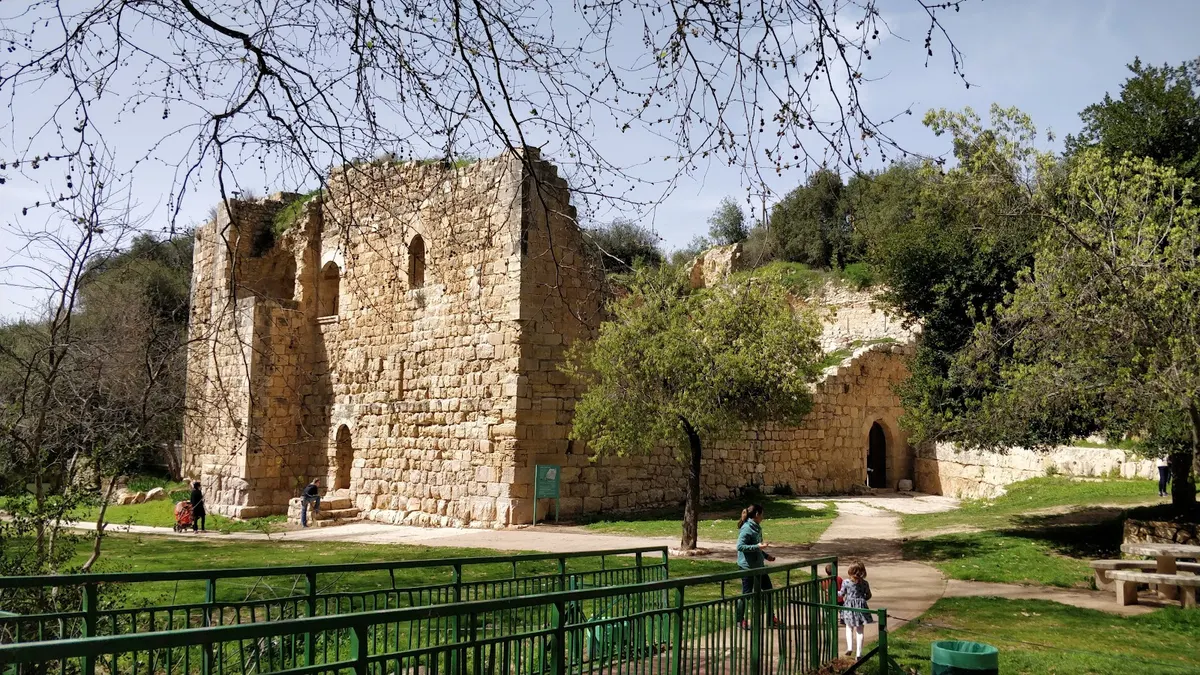
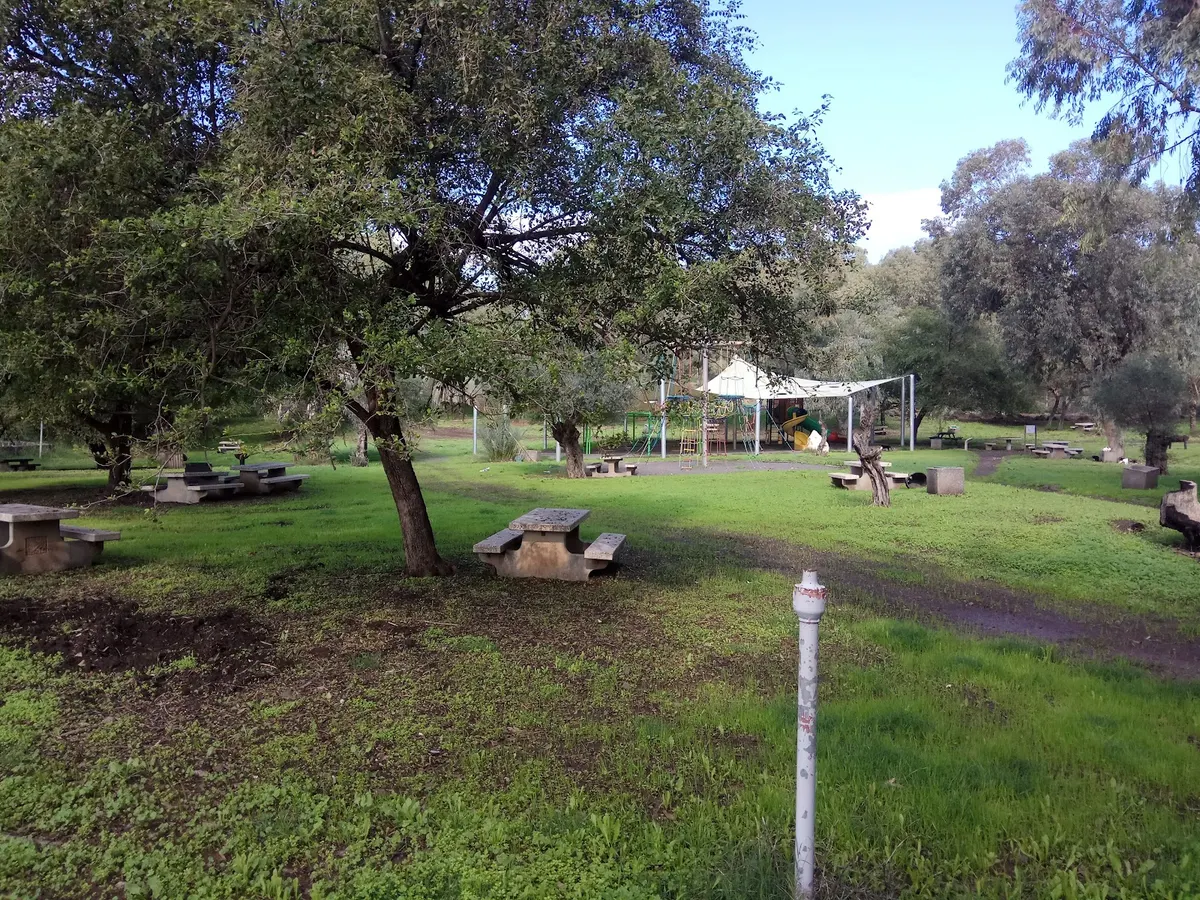
All the information about Ein Hemed National Park for visiting the reserve: advance booking is required. For more details " In the channel of Nahal Kesalon, at a stone's throw from the capital, lies Ein Hemed National Park. The site is intended mainly for rest and leisure, and you'll find wide lawns, shaded picnic tables among the trees, and next to them toilets and water taps, trenches and pools fed by Nahal Kesalon, which flows through this section throughout the year, as well as children's playground facilities (accessible also to people with disabilities). In the fall months, you can enjoy here a beautiful carpet of leaves in shades of orange, just like abroad. The colorful leaves are brought about by the Eastern beech trees—the far-off cousins of the famous Canadian maple. Watch Yav Gal's story at Ein Hemed National Park: Note: Dogs are allowed in the park provided they are leashed and muzzled with a muzzle barrier. Lighting fires in grills is permitted in the upper part of the park. Bathing in the stream within the boundaries of the national park is prohibited. Between all of these you'll find pleasant walking paths that can lead you to a few more fascinating spots in the park. Points of interest at Ein Hemed National Park A Crusader fortress and the remains of an agricultural farm. History and archaeology enthusiasts—though not only they—will be happy to discover, in the southern part of the Ein Hemed National Park, "Aqua Bella" (beautiful water)—a fortress from the Crusader period, which was apparently used as an agricultural farm. The ancient remains of the fortress add a magical atmosphere to the park, and in the same place you can also enjoy a great scenic overlook. Burial cave A circular walking route that passes through the park will take you south to the stream, where there is an ancient burial cave from the First Temple period. Further along the trail you will reach a beautiful scenic view of the hills of Jerusalem. Ancient Oaks Nature Reserve "Aqua Bella" is also the name of a small nature reserve located next to the park. In the reserve there is a plot of ancient common oak trees, and they are the largest of their kind in the hills of Jerusalem! Among the paths in the park you'll also find a circular hiking route suitable for people with disabilities and for strollers, starting at the entrance to the park and passing through its main points of interest. Useful information for visitors to Ein Hemed National Park Opening hours: (Park entrance is closed one hour before the listed hours) Summer time: Sunday–Thursday and Saturday: 8:00–17:00 | Friday and holiday eve: 8:00–16:00 Winter time: Sunday–Thursday and Saturday: 8:00–16:00 | Friday and holiday eve: 8:00–15:00 The eve of Rosh Hashanah, Yom Kippur eve, and Pesach eve: 8:00–13:00 Entrance fees: Regular: Adult: 22 ₪ | Child: 9 ₪ | Student: 19 ₪ | Senior citizen: 11 ₪ Group: Adult: 19 ₪ | Child: 8 ₪
נקודות עניין נקודת חן בטבע בהרי ירושלים ואזור בית שמשנקודות עניין נקודת חן בטבענקודות עניין: טבענקודות עניין: משפחתי
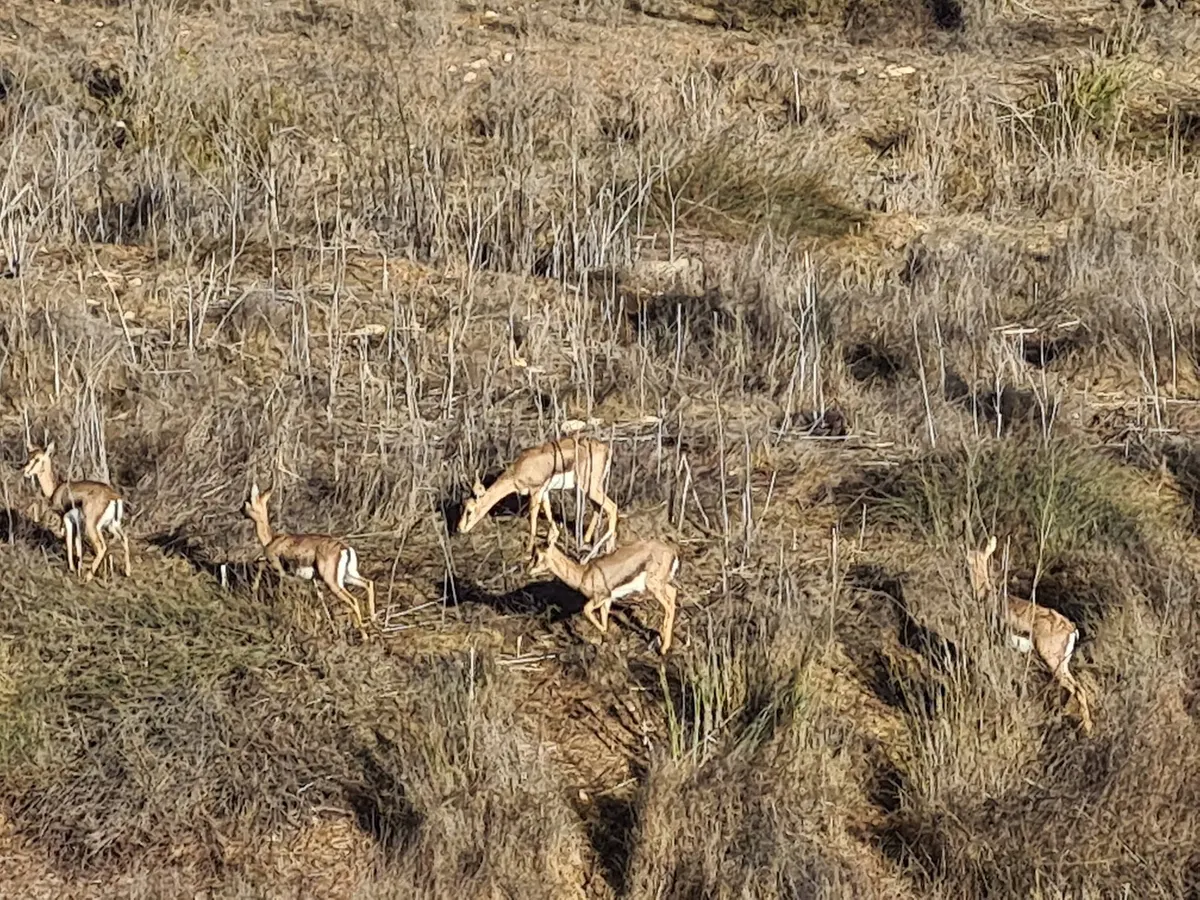
All the information about Deer Valley in the Jerusalem Parks: about a hundred deer, in addition to a wide variety of mammals, birds, and other birds of prey—some of them endangered species. You're invited to come, stroll around, and see animals living in conditions very close to life in the wild—all in the middle of the city. Of course, don't feed them and don't disturb them. For all species of animals and plants, each plays a central role in a unique ecosystem; harming any of them can have consequences for the entire habitat. The park has several walking routes: a short, accessible route to the lake and back, and longer routes, some unpaved, within the woodland. There are also observation hides offering views over the valley's areas, the lake, and secluded corners, with comfortable chairs for sitting and enjoying nature. The history of the site is that of a pastoral valley: in the past, a small herd of deer lived there, enjoying open land that connected to Nahal Refaim and freedom without boundaries. In 1993, when Route Begin was laid, the connection with the stream was cut off and the herd was trapped in the area between the neighborhoods and the roads, and its condition worsened over time. The herd suffered from the chaos, its numbers thinned, and if that weren't enough, a plan for residential buildings in the place could have sealed its fate. This story had a happy ending: residents and caring nature lovers fought against the building plans and for the preservation of nature, achieving unprecedented results. The plans were canceled, the area was fenced, and the herd was saved. For the first time in the country, a nature park was planned in partnership with the public. In 2015, the valley was opened to the general public and became a protected home for the deer. In the beautiful valley, a rich and impressive natural ecosystem developed. Alongside the herd that grew from a small number to several tens (about 80 as of 2021), the undisturbed area became a habitat for all sorts of animals such as insects, reptiles, and birds—some rare—as well as thriving natural vegetation and species of flowers that add to the park's beauty. Visitors can enjoy the abundance and, of course, watch the deer up close as they hop, play, sometimes fight, pause, and observe hikers from a distance. What else does the park do? It also preserves ancient agricultural landscapes, and features a variety of terraces, orchards, and old agricultural facilities. There is also a closed water system operating there. Two stream channels pass through the valley: Nahal Rekafot and Nahal Rachvia. Rain runoff is collected by dams, which created retention pools and, downstream, an inlet basin. The water is pumped from the lake and returned to the beginning of the channel. In every season, the face of the park changes, and anyone who visits quickly forgets that this is a small piece of heaven in the heart of Israel's capital and feels as if they're taking a walk in nature. The park is full of charming spots and, alongside water pools, includes hides for observing and photographing birds. The site also includes a shelter for land tortoises, whose purpose is to rehabilitate injured tortoises or those that were kept, illegally, in captivity by the public. The tortoises are treated and, depending on their condition, returned to the wild. The park's success is reflected in many ways. It is one of Jerusalem's most popular travel destinations, offering plenty of activities all year round. The visitors' center is at the guests' disposal, and every weekend there are guided tours, activities, tours, and stories. Independent families can tour with an activity kit, and can borrow binoculars and field guides—free of charge. The deer herd continues to thrive, and in the summer of 2021, several deer were released in the Golan Heights, and the herd continues to multiply. In the park's vision, it is written that it is a "community urban nature park," and this is why, to this day, there is extensive resident involvement in operating the park. The site is managed by the Society for the Protection of Nature in a community-integration model, and therefore abounds with volunteer social activity. Alongside the integration of populations with special needs, there is a permanent staff and dozens of volunteers engaged in a wide range of activities—from cleaning to tours, workshops, and educational activities, and more. The staff is accompanied by an action committee that supported the struggle and remains involved to this day in planning/administrative decisions, as well as a public council dealing with various issues such as development, education, budgets, and more. The park continues to develop and grow for the benefit of visitors, and at every visit you can discover something new. The site is open during daylight hours, and in darkness it returns to the care of the wildlife. There is a small parking area, and access is also available by public transportation. The park includes seating areas, walking and hiking trails, and it is accessible for wheelchairs and strollers. Useful information: The park is open every day of the week, from sunrise to sunset. Visitors' center hours: 9:00-17:00. Entry is free. The routes are paved and accessible, so you can stroll comfortably with baby strollers and wheelchairs. On holidays, there are guided tours and family activities. Lighting fires in the park is prohibited. Dogs are not allowed in the park.
נקודות עניין נקודת חן בטבע בירושליםנקודות עניין נקודת חן בטבענקודות עניין: טבענקודות עניין: משפחתי
All the information about the Botanical Garden in Eilat The Botanical Garden in Eilat presents a rare organic-ecological collection of plants that were germinated from seeds collected from all over the world. In the diverse vegetation you can find fruit trees, tropical trees, shade trees, spice plants, shrubs, and more. In the garden there is a "rainforest," the only one in the world created by humans without greenhouses or mesh houses, but instead through misty water jets that create tropical humidity conditions. The establishment of the site began in the 1980s with the dream of one person who wanted specifically to grow in the desert plants of different types. Together with two friends, he opened the "Organic Farm" in 1998, where they began growing and acclimating vegetation to desert conditions, integrating research and ongoing monitoring. The garden is built on stone terraces along a ridge of hills at the entrance to Eilat, a place where there used to be a military outpost that was abandoned after the peace agreement with Jordan. Part of the outpost was restored for the sake of heritage and future generations. There are walking paths on site, charming corners, well-organized facilities and parking. In addition, there is a café on site. The garden's nursery sells acclimated plants for the desert, grown using organic methods. The garden is partially accessible for wheelchairs, due to the preservation of natural values. Entry for people in a wheelchair is free of charge. Entry with food and with animals is prohibited.
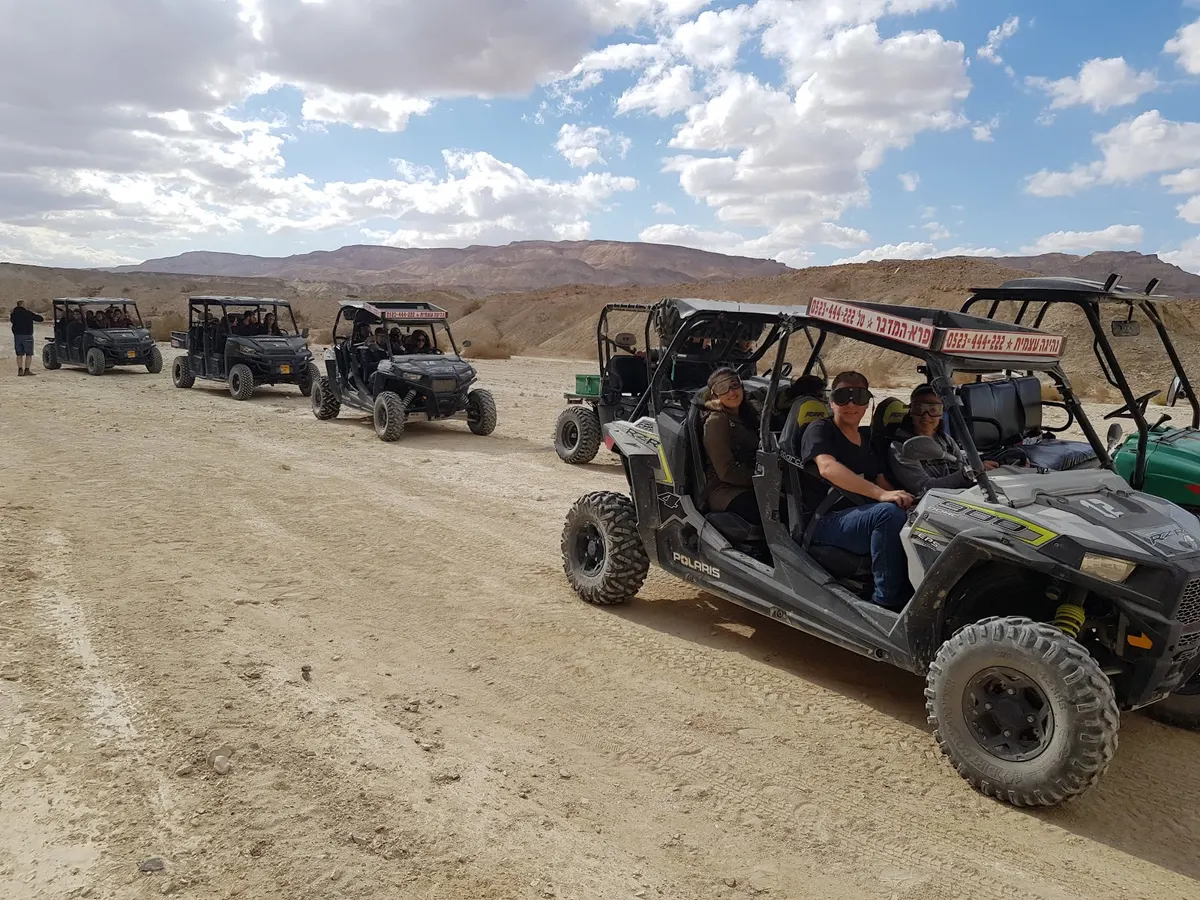
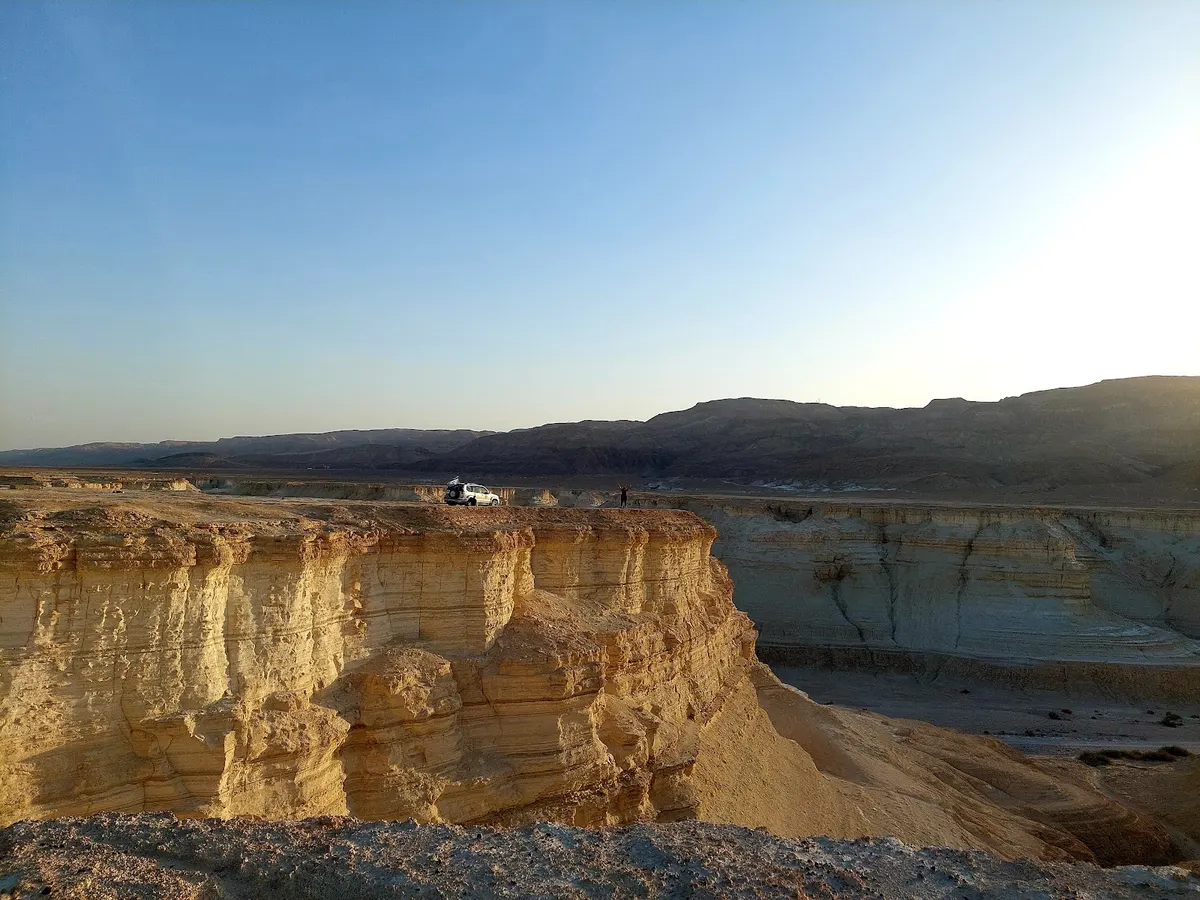
A desert experience for the whole family! Welcome to the Desert Safari Park! We specially prepared for you a variety of experiential tours built based on our many years of experience, in the lowest place in the world—Dead Sea. The Desert Safari Park was founded by tour guide Shlomi Fishman, an expert in the Dead Sea area, Sedom, and the Judean Desert, in 1991. Since then, we are happy to fulfill your desert fantasy! Who are our tours for? Our tours are suitable for all ages: couples, families, groups, and of course for team-building days for employees or fun days in honor of birthdays and special events. In addition, you can go on a tour at any time of day, according to personal preference, including special night tours. Children under the age of 4 can ride only in the guide's jeep, and anyone who drives rangers must be 21 or older and have a driver's license. What tour routes do we offer? Choose your favorite route, according to the goal of the tour and the type of participants: The Classic Route: an exciting, challenging route that lasts an hour and a half. During it, we will leave the gas station in Neve Zohar (five minutes south of the Dead Sea hotels), pass through the large flash-flood reservoirs, through the Himer Valley, the Peraḥot Valley, and a fast driving segment in the Sedom Valley. The Circular Route: the route length is 2.5–3 hours. During it, we will leave the gas station in Neve Zohar toward the large flash-flood reservoirs, from there we will continue to the Peraḥot Valley, the Sedom Valley, and the Amiaz Plain. Then, we will climb to the summit of Mount Sedom, view the evaporation ponds of the potash plant, cross the Amiaz Plain quickly by driving, and return to the gas station in Neve Zohar. The tour includes a stop for light refreshments of tea and cookies. A Route for Experienced Only: a route for those who truly understand, lasting 3–4 hours, and includes driving to the Ḥimer Streambed, the Amiaz Plain, climbing to the summit of Mount Sedom, the evaporation ponds of the potash plant, and an experiential extreme ride with side slopes down Mount Sedom. A Route by Moonlight: a magical moonlight route that takes place every month between the 12th and the 16th of the Hebrew month. The route lasts 2.5–3 hours and includes a short walking segment, an amazing night viewpoint about two hundred meters above the Dead Sea from the summit of Mount Sedom, and indulgent snacks—one cup of red or white wine and a juicy watermelon. Can you plan team-building days for us? Of course—we would be happy to organize fascinating team-building days for you with activities tailored personally for you, including challenging group tasks, walking, abseiling, indulgent meals, and many more surprises.
טיולי ג'יפים בדרום ים המלח ומדבר יהודהטרקטורונים / קרטינג / רייזרים / אופנועים בדרום ים המלח ומדבר יהודהאטרקציות בטבע בדרום ים המלח ומדבר יהודהאטרקציות לקבוצות ואירועים בדרום ים המלח ומדבר יהודה
All the information about Nashon Afeq – Jeep Tours in the Desert. Our tours are available at any time of day or night, and in every season—summer or winter! It's also possible to book guided tours in languages: English, French, and also Spanish. Much more than just a jeep tour: the tours last about 3 hours minimum up to a full day, with a route that climbs to an altitude of 900 meters to the summit of Mount Amash'a, above the large planted forest in the Middle East! From there we will continue on a desert tour, combining a stop for tea and coffee at a Bedouin campsite at the Judean Desert level. Next, we will reach the caves used as a refuge by Bar Kokhba's days along the Chaver Stream, and on to the cliff of Ha'atakim above the Dead Sea. Our tours: Jeep tours throughout the Yatir region — the classic tour; the house tour in the classic route where everyone enjoys! Extreme enthusiasts will get the portion of adrenaline they need, as the route provides it, and those seeking calm will also enjoy the amazing scenery combined with gentle driving tailored to their preferences. Tour duration: about 3.5 hours. Sunrise Jeep Tours are invited for a special experience you won't find anywhere else—an unforgettable sunrise tour! There's nothing like morning coffee with the sunrise over the hills of Moab and Edom. Afterward, a light morning walk is planned in Nahal Sheqirato, whose walls are beautiful, along with a refreshing dip in a hidden spring. Tour duration: about 3.5 hours. Night Jeep Tours: come for a tour that begins in the dimming of sunset and sets off for a nocturnal desert experience in the land of Sodom. The tour includes a walking segment by light of lanterns and stars, or by the light of a full moon. You'll learn to get to know the celestial bodies, search for scorpions with a special lamp, and there will even be an option for a night-time dip in a spring in the heart of the desert. Tour duration: about 3–4 hours. For a taste of the nocturnal desert experience—watch the video. Depending on the route, it's possible to end the tour at one of the excellent wineries in the Yatir region, or to combine a guided visit to the Talmudic town of Susya, have lunch at a café overlooking the view, and even visit the "Eveqedam" herb factory, which combines desert plant species in mini blends of teas and medicine. It's also possible to order a meal at the lone ranches' farm 'Sheq Maan,' located in a wild landscape.
אטרקציות בטבע בדרום ים המלח ומדבר יהודהאטרקציות לקבוצות ואירועים בדרום ים המלח ומדבר יהודהטיולי ג'יפים בדרום ים המלח ומדבר יהודהסיורים בדרום ים המלח ומדבר יהודה
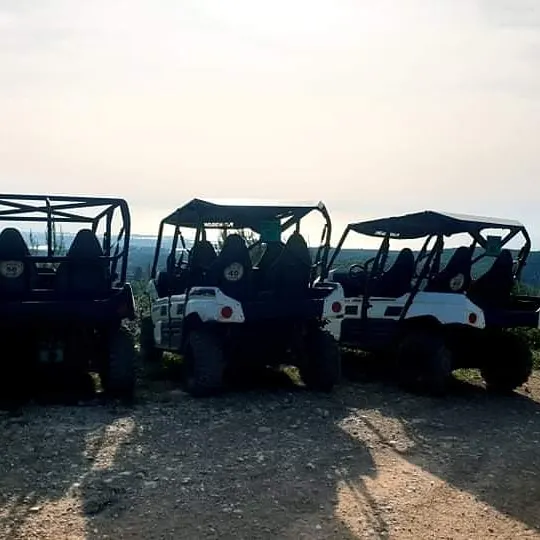
To tear up Carmel on a Razor—have you already thought about how to celebrate your partner's upcoming birthday? And what about your anniversary? Write down "Carmel Razor Scooters"—an exciting off-road experience on a Razor that goes between stunning landscapes, wild cliffs, and magical trails. Along the route you'll get to discover hidden corners of Carmel, and also stop at a pastoral point along the way, where you'll take a break with excellent coffee and cookies in front of a breathtaking viewpoint. Riding the Razor is done independently, and is intended for 4 or 5 people per Razor, in groups of up to 22 people—perfect for couples or for the whole family and team-building days! An experienced guide will accompany you throughout the route, and will be happy to share with you the secrets of the enchanting landscapes you'll pass along the way. Photos: Carmel Razor Scooters. And what about dessert? It's known that after an adrenaline-filled activity, you always get hungry. Luckily, at the end of the off-road experience you can enjoy Druze hospitality in the full sense of the word, including a Druze pita with all the beloved toppings (labneh, za'atar, and olive oil), as well as an authentic Druze meal ordered in advance.
אטרקציות בטבע בחיפה והר הכרמלאטרקציות לקבוצות ואירועים בחיפה והר הכרמלטרקטורונים / קרטינג / רייזרים / אופנועים בחיפה והר הכרמלטיולי ג'יפים בחיפה והר הכרמל
All the information about Rangers in the Village: An off-road experience in Carmel by Shadi, a graduate of an elite combat unit, who wanted to initiate change—new, exciting, and experiential—that would promote an introduction to Mount Carmel. Enjoy an exciting and fun off-road ride between the pine and oak trees in Carmel, the slopes of Mount Shokef and the village springs. Rangers in the Village offers a wide range of outstanding experience options that leave you wanting more, including: an off-road riding route in the green Carmel on spectacular routes overlooking the Mediterranean Sea; combining meals; a honey workshop including "homemade" tastings; explanation and additional activities tailored personally. The Rangers in the Village trip is suitable for couples, families, and groups who can enjoy experiential self-driving in off-road vehicles. In fact, anyone who loves off-road trips is invited to enjoy an authentic Druze experience in front of the beautiful scenery of the Land of Israel! The ride in a ranger includes: a short briefing on how to use the rangers; an explanation of the route you will take; self-driving in off-road vehicles throughout the green Carmel alongside green landscapes, fields, and fascinating nature; stops for coffee and treats at spectacular viewpoints overlooking the Mediterranean Sea; a stop at a cool spring; a Carmelian extreme trip combined with a special Druze experience. In Rangers in the Village, you can choose between routes—from the shortest one-hour route to a long one that lasts about two hours. Other attractions you can also include for a nominal fee: you can taste honey produced locally and from guided workshops on the world of bees with the person at the site, who has extensive experience in the field. All honey | Courtesy of: Rangers in the Village
אטרקציות בטבע בחיפה והר הכרמלאטרקציות לקבוצות ואירועים בחיפה והר הכרמלטרקטורונים / קרטינג / רייזרים / אופנועים בחיפה והר הכרמלסיורים בחיפה והר הכרמל
"Nature Phenomenon": A light-and-sound show at the Yarden Park When was the last time a 500-year-old tree spoke to you? This is where it will happen. You'll also receive situation tips, dance with a chameleon, and hear experiences from ancient basalt stones. As evening falls on the banks of the Jordan River, visitors to Yarden Park are invited to the park's new attraction—"Nature Phenomenon." This is an activity for the whole family during pleasant evening hours: a funny and educational nighttime light-and-sound show and tour dubbed by the stars of "Eretz Nehederet"! The activity includes a walk along a marked and illuminated path with special lighting that combines music, stories, and humor about the park's animals, trees, stones, and the park's history. The tour lasts about an hour, and you must arrive about a quarter of an hour early. Note: Price—The cost of the tour is 40 NIS per person, age 3 and up. The tour requires advance booking. To make reservations, enter the Yarden Park website. The path is accessible for baby strollers and for people with disabilities; there may be delays at departure times. Photo: Yarden Park Enjoy nature all day long The extensive areas of Yarden Park, part of which is in the northern section of the Sea of Galilee, allow you to enjoy nature for a full day—and even more. You can start the day with a walk on a variety of marked trails suitable for all ages—from a short, shaded, comfortable route to long routes. Continue to find a hidden gem along the Jordan River, by the spring or beside the ancient flour mills, and sit down for a family picnic or with friends. Within the park you can find Tel Beitsaida, a fascinating archaeological site, fishing channels, rafting, and kayaks. The park is spacious, and even in busy periods everyone can find a magical, quiet shady spot beside common reed and flowing water. What awaits you at the park? 6 walking tour routes Excellent accommodation options Archaeology and heritage Nature Phenomenon—A nighttime attraction Snack bar and food and beverage stalls Opening hours: In the months of March–Nov., between 8:00 and 21:00, day visit between 8:00 and 16:00 in the months of Dec.–Feb., between 8:00 and 16:00. Photo: Yochai Koren Want to enjoy yourselves in the complex and not have to go back home? You can stay overnight in the park: in camping, in an authentic Bedouin tent camp on mattresses, in air-conditioned guest rooms, or if you arrived with a caravan, you can enjoy a neatly arranged parking area with water and electricity connections. The park has showers and restrooms, accessible areas for wheelchairs, picnic tables, designated areas for barbecues and grilling, and playgrounds for children. For more details about lodging at Yarden Park"
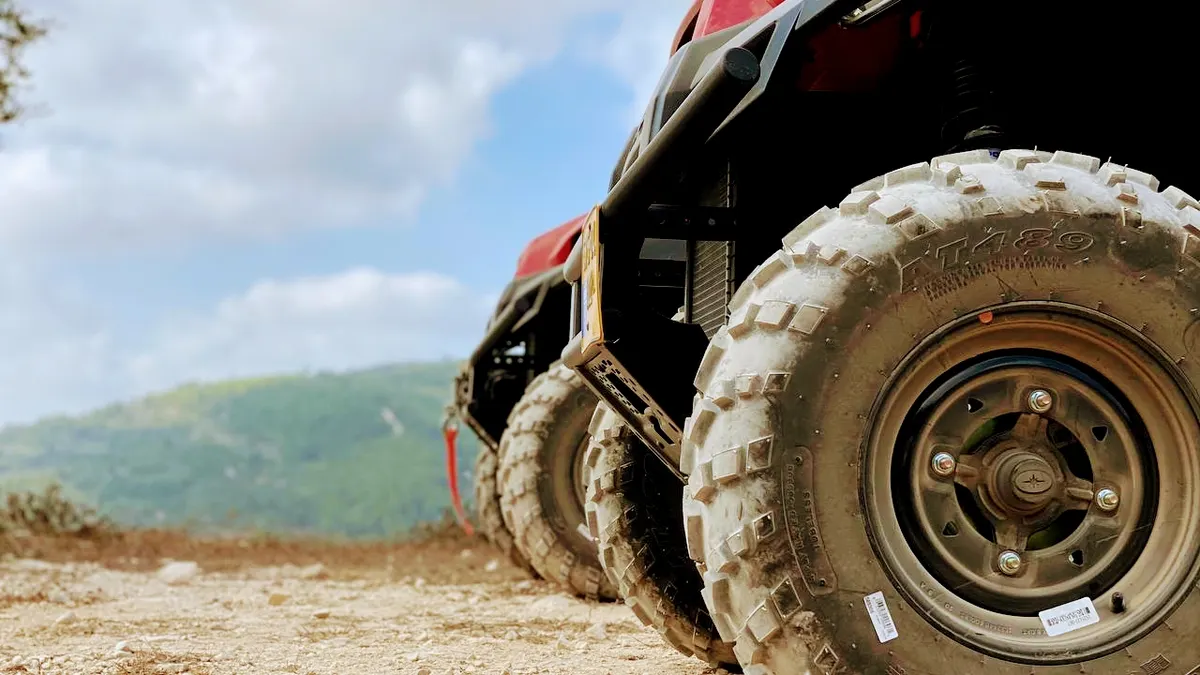
All the information about Fini on the Terrain: Raiser (ATV/Off-road) Tours in the North. Come for an extreme experience for all levels with "Fini on the Terrain"! We offer a selection of tour routes with views of the Jordan Valley region, Degania, and the Kinneret, suitable for all seasons. Our company has 5 vehicles, from a desire to take out small, personalized tours for each group—in order to create a more intimate, unique, and bonding experience. Our 4-seater razors are suitable for families, and our 2-seaters are suitable for couples. Photo: courtesy of Fini on the Terrain. Where do you tour? All the routes depart from Kibbutz Kinneret in the Jordan Valley region, located on the southwest side of the shores of the Kinneret, near the Degania Dam, at the foot of the Southern Jordan River. The Southern Jordan River and the stream channels that flow into it are characterized by water flow throughout the year. Throughout all the routes, you'll enjoy a stop for coffee or tea, with a light snack according to the season you arrive. In addition, in advance coordination, you can incorporate into the tour a variety of attractions for a full day of fun. We have a variety of routes with breathtaking scenery, and they can be done either dry or wet, with a light dip in the streams or the banks of the cool Southern Jordan River throughout the year. The routes we offer come in different levels of difficulty, from an easy tour to a tour for people with experience driving off-road. Easy route dry/wet—1 hour and 15 minutes. Moderate route dry/wet—1 hour and 15 minutes. Challenging plus route dry/wet—2 hours. Who is it suitable for? Our tours are perfect for a family experience or a group experience, and also for a couple's, romantic experience. Important to know: Driving the vehicles is from age 21 and up, with the presentation of a valid driver's license. In advance coordination, you can book a field breakfast, chef meals in the heart of nature, marriage proposals or a surprise birthday during the tour, and the organization of a fun day for groups. Take a look:
All the information about Ein Gev Port At Ein Gev Port there is a wide variety of attractions for the whole family. You can call the phone number in order to make reservations and for additional details. New in Ein Gev—an extreme boating experience in a fast boat for the whole family. Tourism in Ein Gev invites you to spend an extreme boating experience in the fast boat "Tornado" for the whole family. Departing from Ein Gev Port, aboard the fast boat "Tornado" of "Shayit Kinneret," equipped with life jackets for a fast sailing experience lasting about 10 minutes in the depths of the Kinneret Lake. Enjoy the beauty of the beaches, the surrounding hills of the National Lake (National Park) and, of course, the waters of the Kinneret. On the fast boat, reaching a speed of 40 km/h, there are 7 seating places. After returning to the pier, it is recommended to complete the experience at Yosi the grandfather's carpentry workshop with wood-creation workshops, as well as in a play area that looks like a pirate ship equipped with nets, ladders, etc. In addition, you can go on a guided tour around the kibbutz during which you pass important points in kibbutz life, as well as between the kibbutz's branches—cowshed, orchards, and more. To conclude—lunch at the fish restaurant offering a variety of fish dishes, children's dishes, and more. Sailing departure from age 5 and up. Sailing price: 30 NIS per participant. Minimum of four participants. By prior coordination. Conditional on weather conditions. Operating days and hours: Saturdays and holidays between 10:00 and 15:00. In the month of July—on Fridays and Saturdays between 10:00 and 15:00. In the month of August—on Mondays, Wednesdays, Fridays and Saturdays between 10:00 and 15:00. The fish restaurant in Ein Gev The famous fish restaurant in Ein Gev began its journey 60 years ago. At the beginning, the kibbutz's pioneer founders built a small kiosk for passersby, and today it is the largest restaurant of all the restaurants on the Kinneret. The restaurant has a balcony that touches the coastline line, with a view of the magnificent Kinneret landscape, serving the public of lovers of Kinneret fish and the pilgrims who visit the area. The restaurant offers an impressive and indulgent selection of various fish—fried and baked on a grill and in an oven. Phone for contact: 04-6658136 Fishing boat trips and sailing on the Kinneret For the service of guests—on boats of the Shayit company. A skilled and experienced crew on every boat, sailing along the coasts of the Kinneret, and coast to coast in the Kinneret. The Shayit company also offers a fishing sailing trip, during which guests sail alongside a fishing boat that casts a net in the depths, and watch the fishing process while receiving a detailed explanation, bringing up the catch of fish, and a professional explanation from the captain about fishing in the Kinneret. Events and social and private parties can be held on ships with a variety of options, for every event and at any time: romantic sailing with sunset/sunrise, birdwatching-themed sailing, sailing with a backdrop of the area's history, a religious-geographic and political overview, and more. Every Friday at 10:00 there will be a fishing sailing trip. During the trip on the boat, they join the fishing boats, watch the fishermen at work, and receive explanations. The trip departs from Ein Gev Port. Price: for an adult 35 NIS; for a child 30 NIS. Payment is from age 3. Phone for contact: 04-6658036 Via the kibbutz—guided train tour in Ein Gev A fascinating experience for the whole family! A ride on the unique train of carriages, connecting past and present along the kibbutz paths. The train passes through the kibbutz paths and allows a view of the kibbutz branches such as the cowshed, bananas, dates, and ostriches—all while enjoying the Kinneret view, mountain views, and a well-kept and beautiful surrounding area. The train tour reveals the interesting story of the places, people, houses, and the atmosphere in the kibbutz from then until today. Duration of the tour: about 30 minutes with a recorded explanation that tells the history of the kibbutz. Phone for contact: 04-6658008 Yosi the grandfather's carpentry workshop—children's workshop for self-made creation in wood and paint A special workshop for creating wooden toys—each child chooses a wooden toy, paints, sands, glues, screws, connects, and returns home with a wooden toy that they built themselves. At the site there is not only a play area with an experiential and educational wooden play structure, a shop of unique wooden toys, "A Corner in the Carpentry"—popsicles and drinks. You can hold birthday days, kindergartens, day camps, youth groups, and managers' workshops on site. Phone for contact: 04-6658195 Sussita camping parking lot—an open, shaded parking lot in the northern bay for the Sussita Beach kibbutz. Sussita Beach is a beautiful beach in the Kinneret, located north of Ein Gev, along the length of the bay, in a sunny and breezy spot. The beach is strewn with natural infrastructure of sand and small stones extending all the way to the waterline. In return for an additional payment and according to prior booking, the site offers groups marked grass areas, tables, chairs, refrigerators, and additional facilities. Open from April until the end of October. Phone for contact: 04-6658199 Anchors House—Museum of the History of Fishing in the Kinneret At the Anchors House museum there is a unique display of finds from the Kinneret related to fishing—from days of the Bible to the present day. The visit opens a "window" into the most important economic sector in the area since long ago—about 3,000 years ago. Visiting the Anchors House is by prior coordination and with payment. For those interested in the world of fishing and to complete the experience, Ein Gev tourism offers a unique fishing sailing experience and the possibility to be a fisherman for one day, as well as many attractions, leisure activities, and experiences at Ein Gev Port. Phone for contact: 04-6658008 More in Ein Gev tourism Declared bathing beach with a lifeguard. On a beach with grass and shade tables (near the fish restaurant). House of the fruit—selection of fresh fruit juices, coffee, and ice creams. More at Ein Gev Port—House of the fruit, offering a variety of natural shakes and fruit juices, an art gallery, the Anchors House museum, and a visitors center "Ola'a Essence"—the Golan olive oil press (olive mill house)
פארק מים / חוף רחצה בטבריה, כנרת והעמקיםמוזיאון / גלריה / אתר היסטורי בטבריה, כנרת והעמקיםסדנאות / הרצאות בטבריה, כנרת והעמקיםאטרקציות בטבע בטבריה, כנרת והעמקים
Upper Galilee, the Finger of the Galilee, and the Golan
All the information about buggy tours in the Golan: an off-road experience in the northern Golan Heights. Welcome to Buggy Tours in the Golan! Your experience begins in Majdal Shams, in the heart of the industrial zone, and continues for about an hour and a half of independent driving in buggies on designated roads. Yes, yes—you drive yourselves! Along the way, you will cross green orchards, reach the breathtaking point at the Ram Reservoir (Barat Ram), and stop for coffee and a view over the water. Beyond the fun of the ride, this is a route that passes through sites full of history—from Mount Hermon to the border line—along with stops that connect the past and the present. The tanks from the war, the view toward Syria, and the explanations you'll receive along the way—all of these create an experience that combines adventure with educational value. Photo: Courtesy of Buggy Tours in the Golan. What does the experience include? Off-road tour in the open: an off-road route in the Golan that starts in Majdal Shams and continues to the border with Syria. A close-up look at history: a stop near old tanks, observation points along the border line, and a fascinating explanation about the area. Breathtaking scenery: a panoramic view of Mount Hermon, driving through orchards, and stopping at the Ram Reservoir right next to the water. Important information: Convenient starting point in the industrial zone of Majdal Shams (with parking available). Suitable for families with young children; you can sit with an accompanying adult. A properly scheduled stop halfway along the way, with time to take photos, drink coffee, and enjoy the view. Must arrive with a valid driver's license (for drivers only).
Mount Hermon and the Sources of the Jordan / Golan Heights
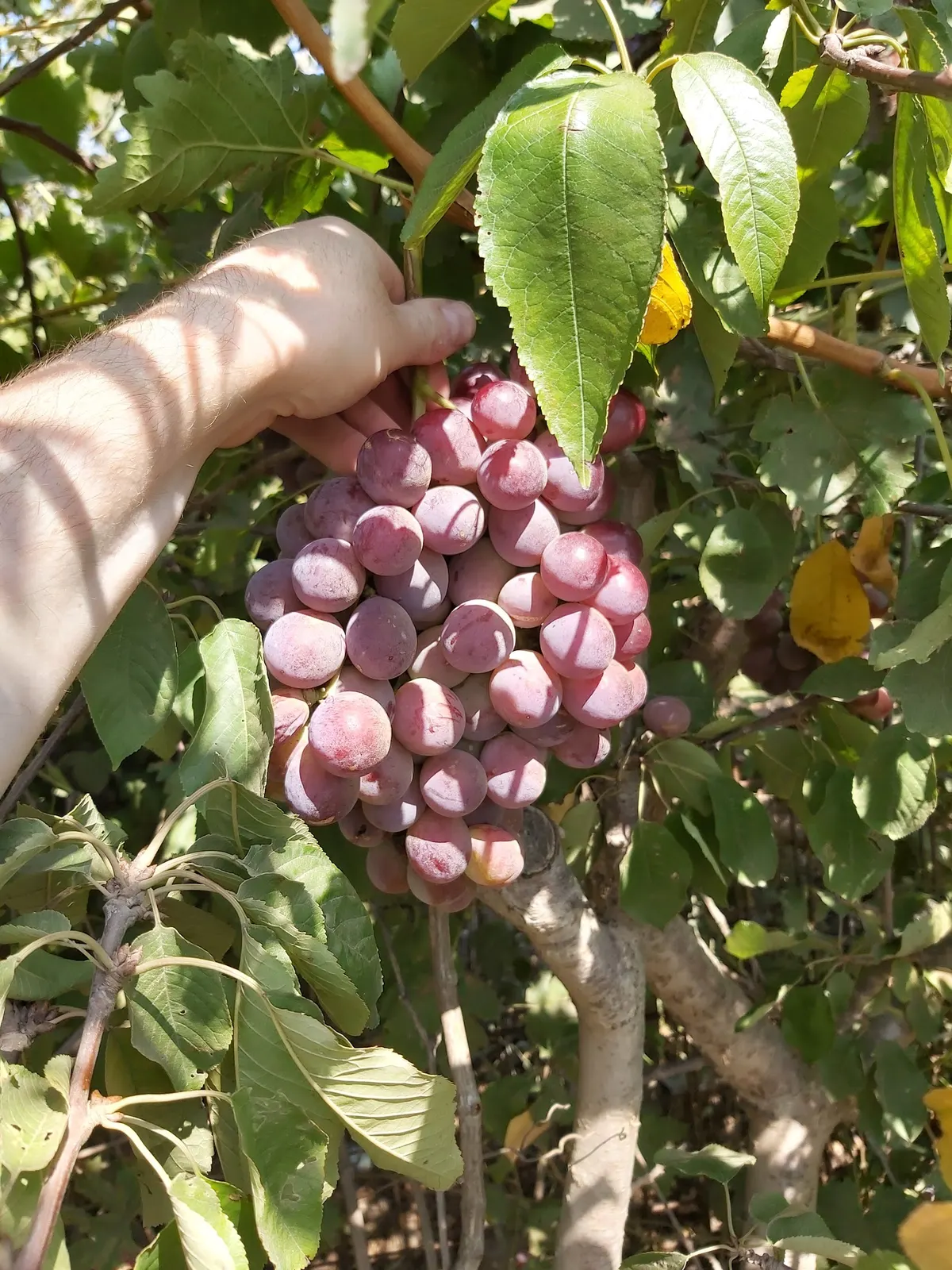
All the information about the Ahmodi pick-your-own cherry orchard park in our park. Experience an authentic green agricultural experience in the north of the country, where children are given independence and can wander on their own in the orchard and pick cherries for their own enjoyment during the season. Until the end of October, apple picking is available! Parents can take part in the experience with the children and also take the time for yourselves—rest, clear your head, and give yourselves a moment of quiet in front of our beautiful headquarters. As part of the experience, you can enjoy: cherry picking, a shared ride in a wagon to a stunning lookout, pedal carting around the orchard, picnic tables throughout the orchard for your convenience, horseback riding and animal petting, ninja and trampoline facilities, slides, and more. Druze flatbread with labneh. You can pre-order an authentic Druze meal for groups and individuals. 25 NIS entrance per person, including free eating from the orchard.
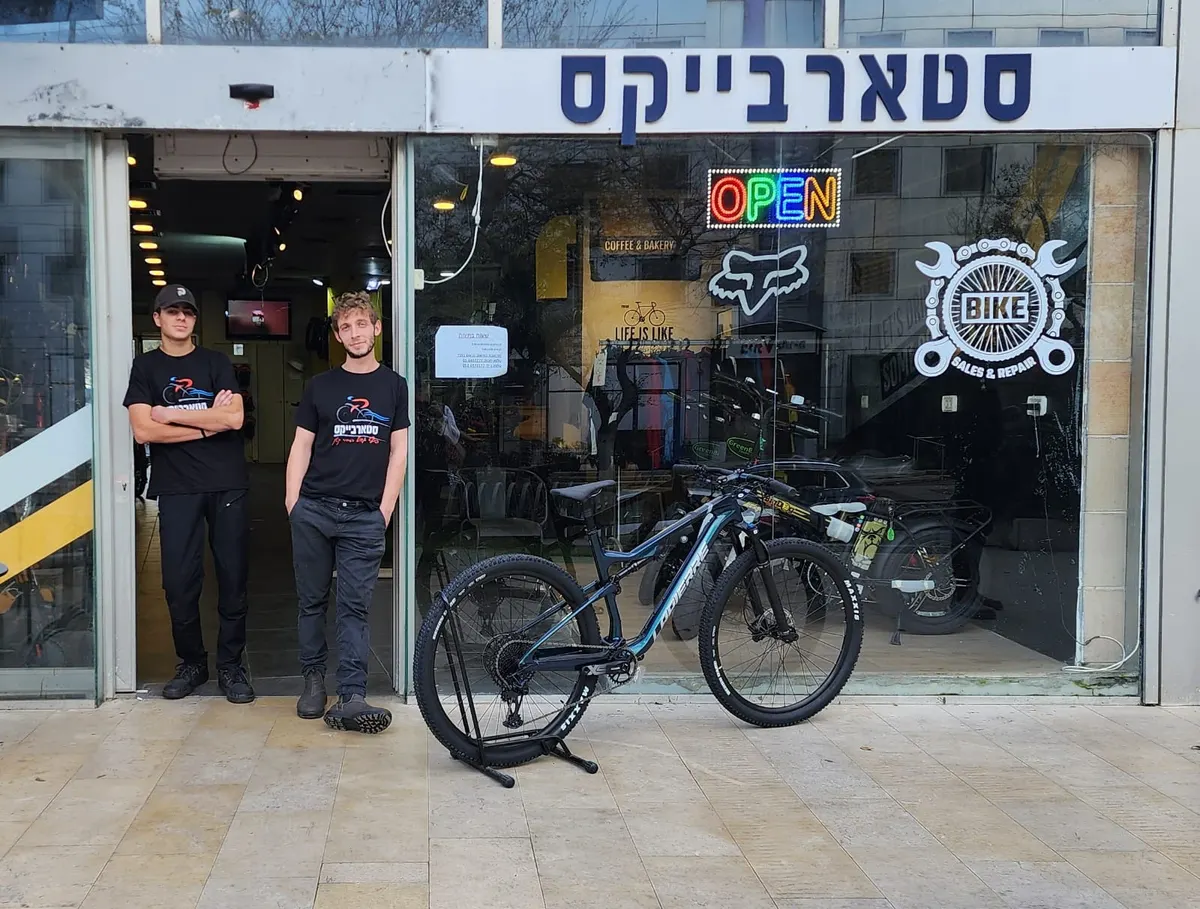
All the information about Starbikes — bike rentals in Yarkon Park. Starbikes — take part in the perfect urban cycling experience! Looking for a quality place offering bike rentals in Tel Aviv? You've come to the right place! With us you can buy or rent bikes of any kind for a day, for several days, or even just for a few hours. An original idea for a fun family outing, for team days, for a romantic trip with your partner, and even if you're coming to the city for a day of errands or a fun day with friends! Note — on rainy days, it's recommended to check in advance about our activities.
אטרקציות בטבע בתל אביבהשכרת אופניים / אופניים חשמליים בתל אביבאטרקציות לקבוצות ואירועים בתל אביבאטרקציות בטבע
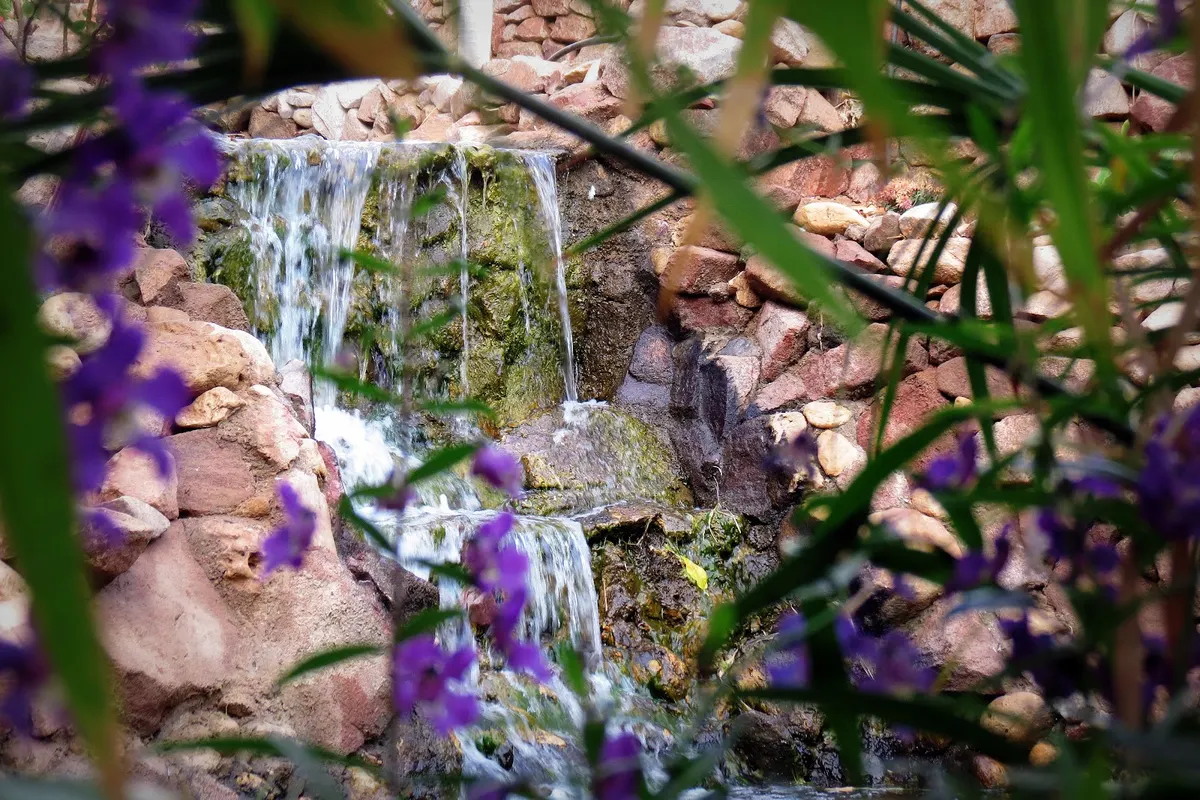
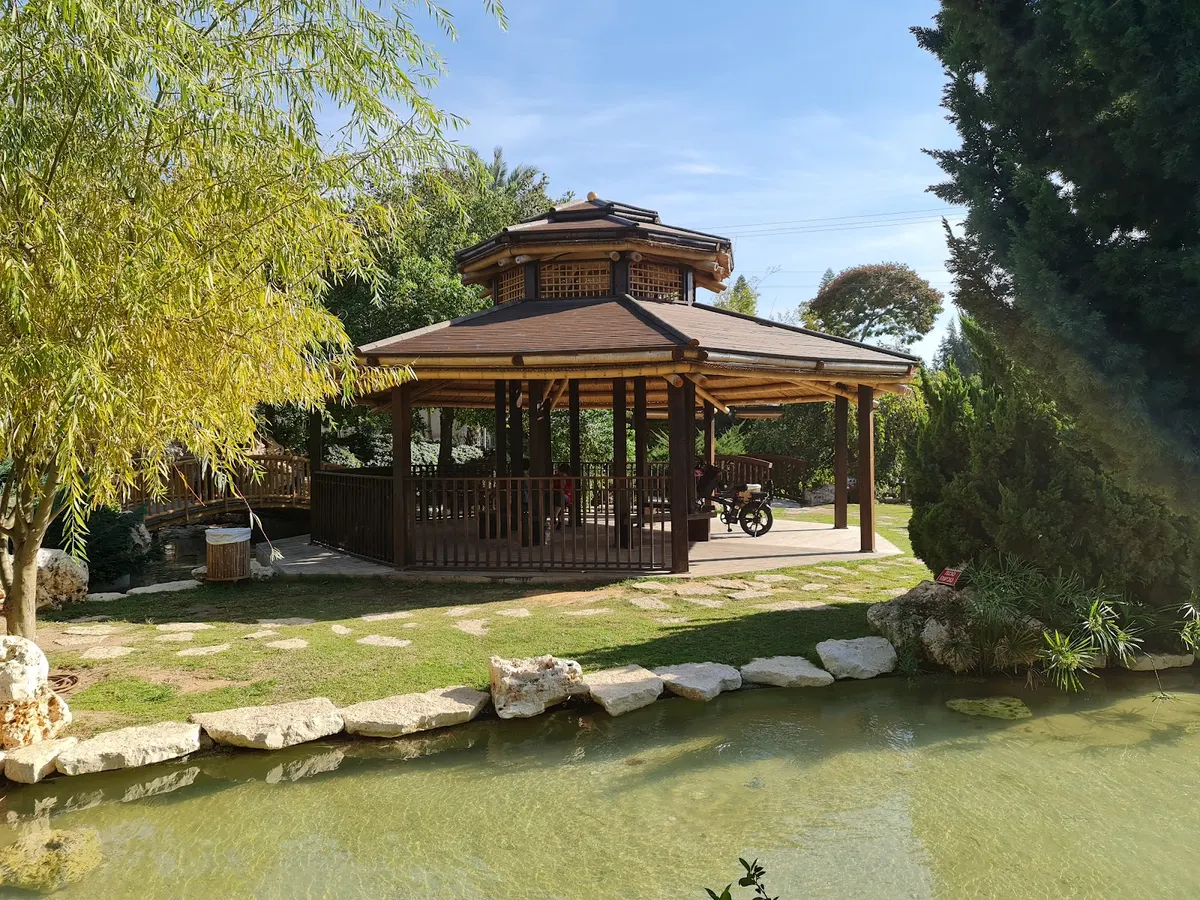
All the information about the Japanese Garden in Holon. In the center of Holon, there is a small garden, two dunams in size, teaching something about Japanese gardening. The garden is not large, but provides a delightful spot to relax. In the garden there is a small waterfall that continues into small streamlets running between pergolas, seating corners, and unique vegetation. In the garden you can also find a cherry tree that blossoms every year. The vegetation hides the busy road from visitors. In its center there is a pagoda house; access to it is via bridges, and it is surrounded by water on all sides. Especially uplifting is the water tap operated by pressing with your foot, which is well hidden in a kind of stone trough. The garden was designed by Chaim Cahanovitz, inspired by Japanese gardens, at the request of the Holon municipality, which wanted to go beyond the usual routine of landscaping with lawns and trees. Many visitors come to the garden, which is open all year round (all hours of the day) and serves as a preferred site for couple/wedding photography (bride and groom).
נקודות עניין נקודת חן בטבע בחולון, פתח תקווה וגוש דןנקודות עניין נקודת חן בטבענקודות עניין: משפחתינקודות עניין: לילדים
All the information about Ayin El Kef – Ayin El Kuf, updated as of 2.8.18: The spring is dry. If someone wants, it is possible to climb another 20 meters up the terraces and see the actual outflow. The area is lovely and quiet, and usually there are no people. Distance from the car: 5 minutes. Trails map number 9. The spectacular Kuf (Ham-'Mekof') is a spring that was renovated in 2004 by Yoni Golan, a graduate of tours-for-the-public courses. The discovery of the spring, as I learned, is part of a serious investigative work that Yoni's father, Dani Golan, did about the village of Khirbat al-Luz, which existed there until the summer of 1948 on the opposite Mount Eitan. Over the years, the small spring above Nahal Shorek disappeared from view and from the maps, but now it is likely to return to them. Dani Golan also wrote a blog describing his research about Khirbat al-Luz and Mount Eitan in general | To Dani Golan's blog >> A viewpoint on the other side of the stream revealed the complete complex of oxidation ponds in Nahal Shorek.
נקודות עניין מעיין / מקור מים בהרי ירושלים ואזור בית שמשנקודות עניין מעיין / מקור מיםנקודות עניין: טבענקודות עניין: מעיין
All the information about Ein Ksalon—Not everyone knows the amazing beauty of the Jerusalem area. When you travel to the Ksalon moshav in the Jerusalem Hills, near Beit Shemesh, along the way you'll find Ein Ksalon—a small, charming spring where the number of hikers is increasing, but it is still not known to everyone. The clear waters of the spring flow into a small pool beside it, where you can immerse yourselves. A wonderful and very romantic place at night! In the surrounding area: a trip to Nachal Karmila and Nachal Ksalon
נקודות עניין מעיין / מקור מים בהרי ירושלים ואזור בית שמשנקודות עניין מעיין / מקור מיםנקודות עניין: טבענקודות עניין: מעיין
All information about Ein Tanur - an ancient female spring near Ein Motz: not far from Ein Motz, among the ruins of the ancient Tel Tanur (Hurvat Tanur Ha'Atika), there is a hidden water cistern (niche/culvert). From Ein Motz, people usually return to the ruins of Hurvat Chanot, but what many don't know is that about 200 meters west, down the stream where the spring is located, there is an amazing cistern (niche/culvert) that drains Ein Tanur. The cistern is from two different periods, with the older section dated to the First Temple period. In order to increase the spring's flow in the past, people dug a cistern into the rock at the spring, thereby increasing the amount of water. You can enter to a depth of about 12 meters. You need a flashlight, preferably a headlamp. It's important to keep the place clean. Overnight stays are prohibited (a designated night parking lot is located at Hurvat Chanot).
נקודות עניין מעיין / מקור מים בהרי ירושלים ואזור בית שמשנקודות עניין מעיין / מקור מיםנקודות עניין: טבענקודות עניין: מעיין
All the information about Ein Al Hania – Ein Hania: The small pool doesn't really allow swimming, only in the waterfall's water; it's highly recommended. Outside the pools there is plenty of shaded area—for lighting a fire, coffee, and more. You can arrive by car almost up to the spring. Note: There is no trash removal from the site—please collect your trash afterwards to keep the area clean.
נקודות עניין מעיין / מקור מים בירושליםנקודות עניין מעיין / מקור מיםנקודות עניין: מעייןלכל הנקודות עניין באזור ירושלים
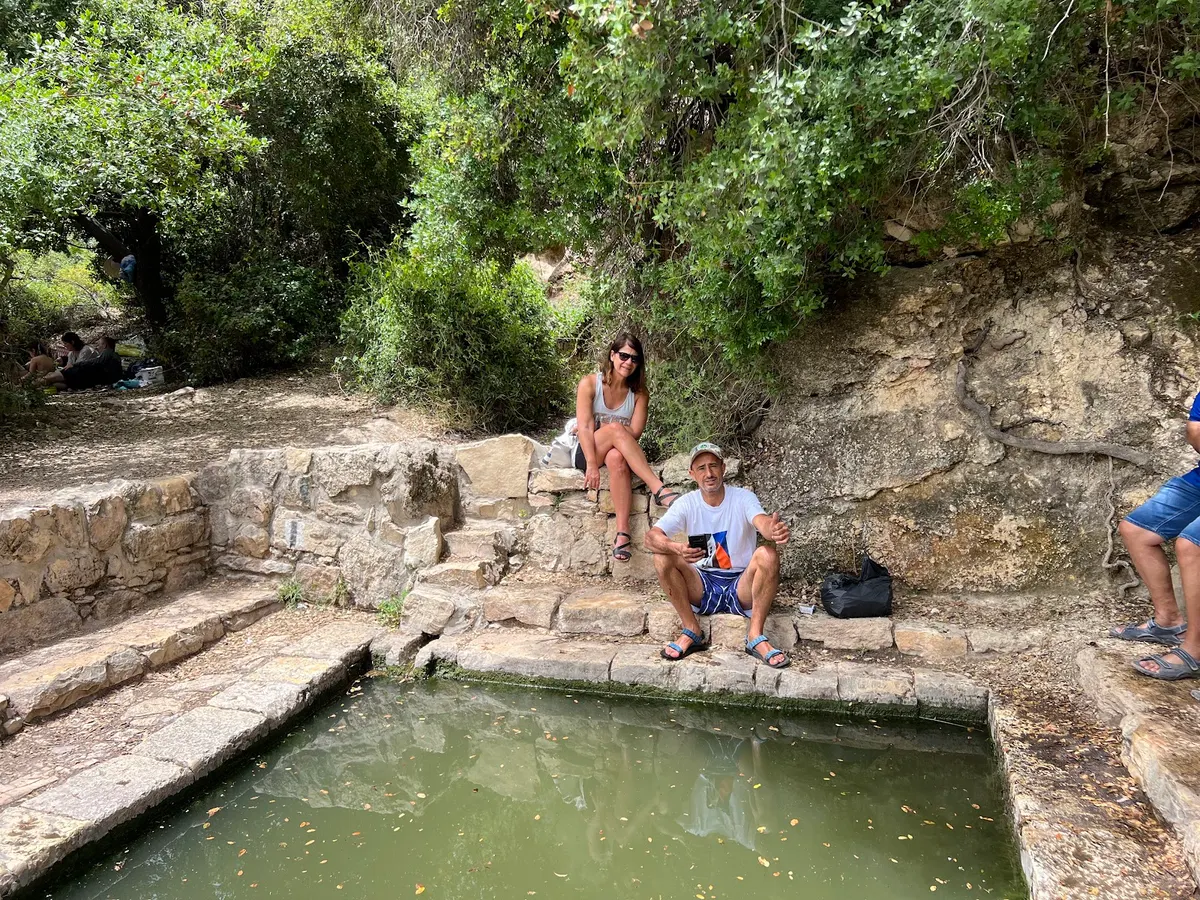
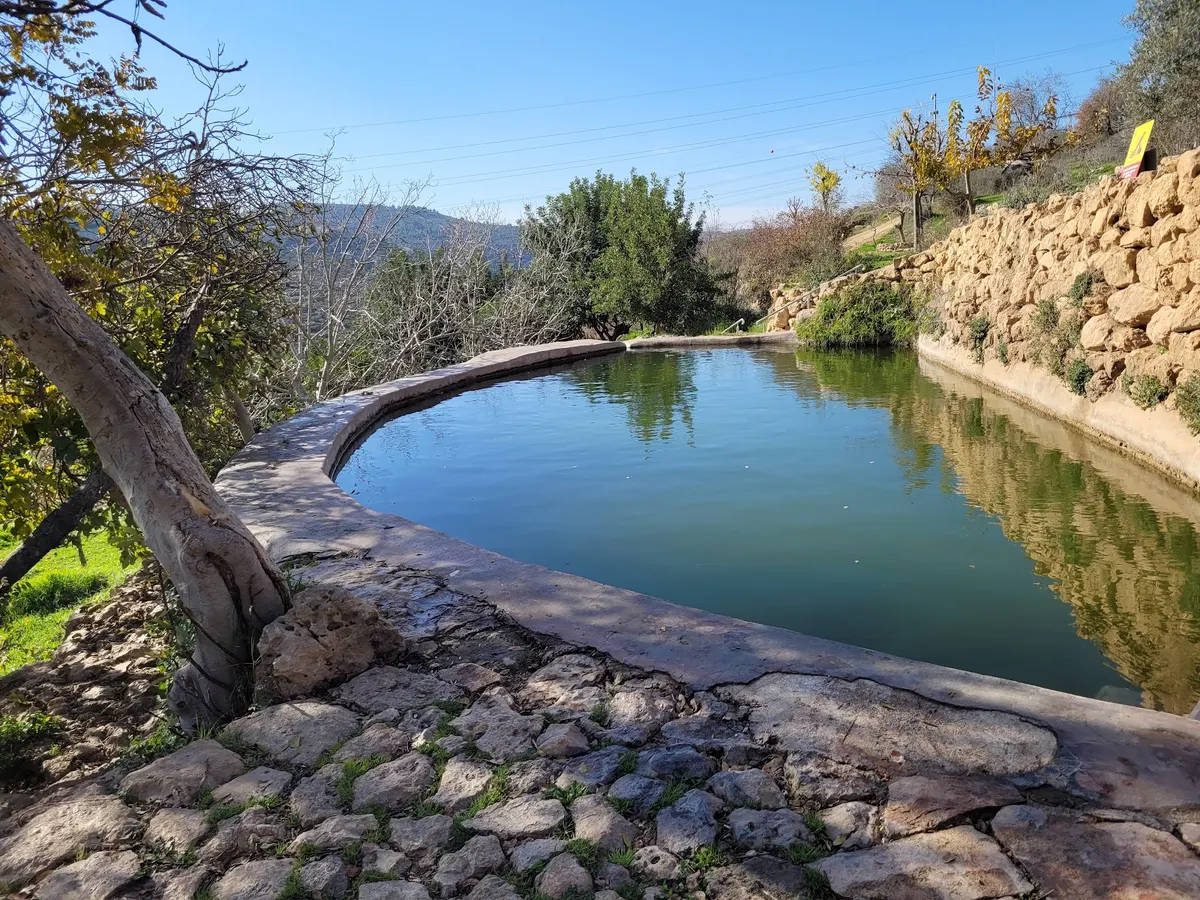
All the information about Ein Tayasim: It is a beautiful and well-kept spring (מעיין יפה ומסודר) that includes an artificial pool filled from a female (female) spring, where the spring trickles. You can sit on the edge of the pool, and around it there are trees and comfortable ground for sitting. When the spring is full, the water is clear and cool. It is recommended to check before setting out whether there is water in it, and even if there isn't, you can always come for a walk because the area itself is very beautiful. When the spring is full, it is amazing, and especially recommended to go there. Access to the spring can be done on foot or by bicycle, and there is access by car to a distance of about 200 meters from the spring.
נקודות עניין מעיין / מקור מים בהרי ירושלים ואזור בית שמשנקודות עניין נקודת חן בטבע בהרי ירושלים ואזור בית שמשנקודות עניין מעיין / מקור מיםנקודות עניין נקודת חן בטבע
All information about Ein Qubei: Ein Qubei is the spring of the Arab village of Qubei, whose residents fled during the War of Independence in Operation "Hah Har." The village preserves in its name the ancient settlement of Qubei mentioned in the Talmud, and in the ruin one can see today remains dating back some 1,700 years from the Byzantine period. Ein Qubei is a layer spring that flows into an underground chamber with arches, which served as an ancient collection system. The purpose of the system was to store water for drinking and to channel the remaining water through a tunnel toward an external water reservoir, from which it fed the wadi's irrigation channels—for irrigating agricultural crops. Near the spring you can see a deserted mosque within a structure from the Byzantine period. It is highly recommended to bathe in the cool spring water. One can enter the water that flows above ground, but most of the water is in the underground reservoir. It is also recommended to enjoy a beautiful circular route in Nahal Qubei that descends from the spring and overlooks a magical landscape. The route is easy and short (about one hour) and begins with trail markings in red. After about 0.5 km downhill, surrounded by dense vegetation, we will join an unpaved path marked in green—previously it was the road used by the patrols opposite the border with Jordan until 1967. We will turn right on the path, and after a short climb we will reach the cars again. In conclusion, it is recommended to enjoy a picnic in the beautiful orchards around Ein Qubei. There is a declared overnight parking area and a water tap. For the full route at Ein Maatte, the Caesar's Path and Ein Qubei >>
נקודות עניין מעיין / מקור מים בהרי ירושלים ואזור בית שמשנקודות עניין מעיין / מקור מיםנקודות עניין: מעייןנקודות עניין: משפחתי
All the information about the Small Wall and Ein Handaq: a short trip in the springs of Jerusalem (4–5 km) and mostly shaded. The hike starts at Ein Handaq (it's recommended to park your car at Even Sapir). The place is full of water and many figs on the trees around. From there, continue on the Israel Trail northbound, descend to Nahal Shoresh, and there is a beautiful spot to stop right after the descent into the wadi; you can see a large dam that was built in the area. It's recommended to sit in the shade of the trees next to the dam. Continue hiking on the Israel Trail along Nahal Shoresh until the ascent to Einot Satf (green trail—relatively steep ascent). It's recommended to bring food and eat under the trees next to the large spring. There are many ruins and agricultural gardens at the site. Observant Jews can continue from Satf to climb to Har Eitan for a viewpoint (highly recommended). Before reaching the viewpoint there is a gate—if there is a sign that says "No entry"—and at the T-junction turn left. Go another 1.5 km and you can find, on the right side, a small water cistern with cool water after the ascent. In the forest, a few minutes' drive from Ein Kerem, there is a impressive and hidden Small Wall. The large stone wall in Wadi Handaq, also called "Wadi Yousuf," got the name "Small Wall" due to its structure, the shape of the stones that make it up, and the fact that it is simply impressive. The "wall" served as a retaining wall and a dam to prevent soil erosion, in order to create an efficient area for agriculture. Different building periods have been attributed to the Small Wall, and some researchers suggested that it was built in the days of Herod (the Second Temple period). Therefore, the similarity between its construction style and that of the Western Wall is not coincidental. The area itself is beautiful and full of attractions. Further along the wadi, on the green route toward Even Sapir, a few minutes' walk separate the "Small Wall" from the spring of "Ein Handaq." Warning about the spring: recently, the levels of garbage in the area around the spring have been quite frightening. Also in the area: the Hadasa Trail—organized walking routes between the green paths throughout the Ein Kerem Hospital area (Hadassah Ein Kerem). Another story about the wadi in the early 1930s: the main roads to Jerusalem at the time were evidence of a frightening abduction/terror campaign by Abu Jildah—the famous highwayman of the area. Abu Jildah's gang of lawless men was lying in wait for travelers on the roads and robbing them. Abu Jildah intimidated the entire area, and in May 1933, after an ambush and robbery by his gang in Wadi Handaq, two policemen arrived at the place. Abu Jildah then murdered one of them when the policeman was not armed. This led to chases after him, and after less than a year he was captured, taken to trial, and sentenced to death by hanging. The name "Abu Jildah" became a byword for a criminal, a highway robber, a pirate, and also a derogatory term in politics; it became a basis for songs and a myth among the Arab public. For the full hiking route in the springs of the Heights of Jerusalem >>
נקודות עניין מעיין / מקור מים בהרי ירושלים ואזור בית שמשנקודות עניין מעיין / מקור מיםנקודות עניין: מעייןנקודות עניין: משפחתי
All information about Ein Lavan: Ein Lavan originates in the areas of the Ein Rafaim Stream National Park in Jerusalem. The spring's source drains from a short culvert through a channel into a large, beautiful man-made pool measuring 4x8 meters, with a water depth of about 1.5 meters. In recent years, Ein Lavan has undergone many changes as part of a long restoration process. The site was declared a national park, and since then terraces and steps have been restored here, trees and herb plants were planted, access paths were arranged, the water pools and channels used to irrigate fields were restored, and in addition, another pool for little children was inaugurated. In the heat of late July, what does a person need more than a fig tree, an almond tree, a pool with water and a bit of greenery? Maybe a watermelon. The spring was used by the residents of the village of Walajeh, which was located on this side of the Ein Rafaim stream until 1948, until it was moved by the Jordanians to the other bank. Today, the spring is named after the White Ridge where it rises (which itself is from light-colored chalk/limestone rock that is common there). White Ridge is part of the Shorak Ridge—one of the ridges extending westward from Jerusalem into the lowlands (on the other side of the ridge, many springs rise; some of them can be seen on the route of Khirbat Sa'adim and the Nakan Waterworks springs in the Jerusalem Hills). In the area of the spring, burial systems dating to the Iron Age and the Second Temple period were also found. Additional (and less well-known) names for Ein Lavan are Ein Olilik (raspberry) and Ein Aguzim (named after a small grove of royal walnuts planted nearby). South of the spring, you can see the channel of Ein Rafaim Stream and the railway line. There's nothing like a dip in a cool spring on a hot day. Did you know that Ein Lavan is on the Israel Trail? See how Yonely Pelag combines swimming in a spring while walking on the segment from Jerusalem to Eilat? Note: Near the steps leading to the spring, there is a trash bin collection area, and the waste is removed from it only. Please keep the place clean and dispose of your trash in the container. Lighting bonfires on the site is prohibited. The spring is very well known, so it is crowded on weekends and holidays. It is recommended to try to arrive at less busy times, and a visit in the early morning hours will ensure you can enjoy the spring more intimately. The route to reach Ein Lavan is via the parking lot of the Biblical Zoo. The dirt road leading from the zoo to the spring is called the Nadav Road, named after Nadav Eilad, a fighter in the Paratroopers' course-branch (Pluga'n) "Tzanhanim" who was killed during operational activity in Hebron. Nadav's family maintains the road and the pool in his memory. The Biblical Zoo The Biblical Zoo is one of the leading and most popular in the list of Jerusalem sites. It presents each animal in a unique way alongside sources from the Bible that discuss it—hence its name. You can also meet animals that have become extinct from the landscapes of the land, and are planned to be returned to nature, such as the Persian fallow deer and the aurochs (Arabian oryx). The zoo began its journey in 1940 as a small animal corner on Rav Kook Street in Jerusalem, and in 1947 it moved to Mount Scopus, but due to the suffering caused to the animals during the War of Independence, it was transferred to the Romema neighborhood. It was located there for about forty years, until in 1993 the current zoo opened. For more information, see the page of the Biblical Zoo on the "Tiulei" site."
נקודות עניין מעיין / מקור מים בירושליםנקודות עניין נקודת חן בטבע בירושליםנקודות עניין מעיין / מקור מיםנקודות עניין נקודת חן בטבע
All the information about Ein Masilla: Ein Masilla is a small and lovely spring where you can wade your feet in the oppressive heat, and you can also have a small picnic there or a "coffee package." Its original name was Be'er Dovav (Bir Dovaan). It was a point on the Burma Road where caravans that arrived from the lowlands met those that arrived from Jerusalem. Today the place is named after the nearby settlement—Masillat Zion. The original Burma Road was paved during the Sino-Japanese War (1938) and led for about 1,100 km from Burma to China, with the aim of bypassing the Japanese forces. The road was also used by U.S. Army soldiers in World War II to transport supplies to besieged China. Since then, any bypass road has been called the "Burma Road." The Israeli Burma Road was paved in the summer of 1948 from Kibbutz Houlda to Sha'ar HaGai, in order to supply besieged Jerusalem. At its center there was a difficult section for the passage of jeeps, so at the beginning the food sacks were transported by porters, and later explosives were used to prepare the road for the passage of trucks—but even then the trucks had to move over iron platforms (serpentines). The road was used for less than half a year, but its impact on the ability of the residents of Jerusalem to withstand the situation was decisive. Today it is possible to travel along the entire length of the road, with the central section still passable only for a front-wheel-drive vehicle with a high undercarriage. The more touristic sections are two: the first is from Mount Tzofim via Einot Susin to Ein Masilla, on Highway 38, where the problematic segment is bypassed by a more convenient route. The second is from the Highway 38 area memorial (the Israel Ministry of Foreign Affairs?)—"אנדרטת המח\"ל" (the Memorial for the Overseas Legion/Volunteer Corps) —to Beit Meir. We can do the first segment along its entire length in any vehicle or by bicycle, whereas we can do the second segment only in a high vehicle with front-wheel drive. In total, there were 13 Burma Roads in the Land of Israel. For example, the Egyptian Burma Road, which was used by Egyptian army soldiers who were "killed in the Zip Plouga," namely today's Qiryat Gat (Kiryat Gat of today). You can see a remnant of it, which is now used as a marked hiking trail colored red, passable for a 4x4 vehicle (because of the sandy/muddy nature of the route). On Highway 40, about a little more than a kilometer south of the Tziplogot Junction, shortly after the trails merge into one highway, there is a right turn into the grove. The road leads to the Sha'ar area settlement—until onwards to Shahar—and continues.
נקודות עניין מעיין / מקור מים בהרי ירושלים ואזור בית שמשנקודות עניין מעיין / מקור מיםנקודות עניין: מעייןלכל הנקודות עניין באזור הרי ירושלים ואזור בית שמש
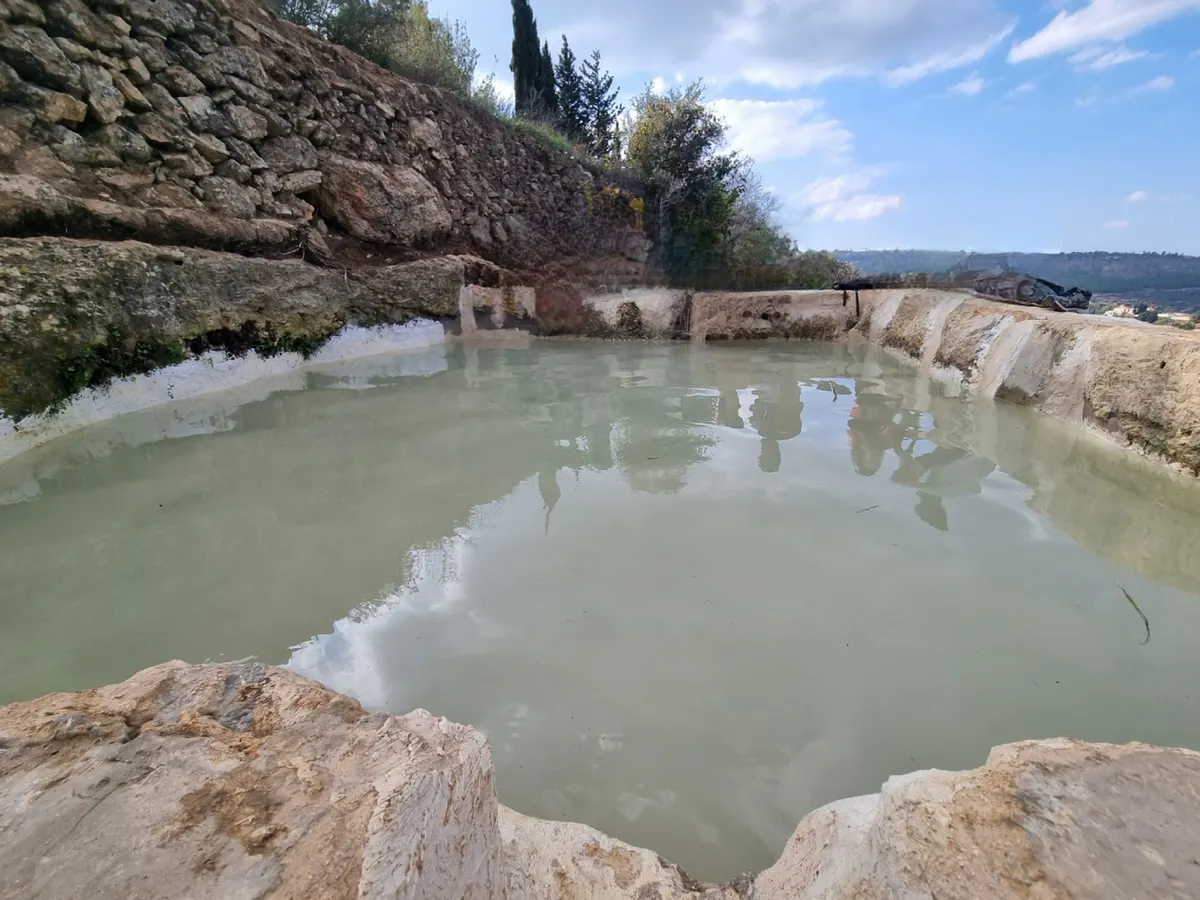
All the information about Ein Ozi: you will find the Ein Ozi spring between the settlements of Orah and Amindav. Here you will find cool water all year round, shaded spots around the spring, and a mountainous view of the Jerusalem Hills and the nearby settlements. At Ein Ozi, you will actually find two female springs (seepage springs), one of which flows all year. Both springs flow into storage pools, and carved channels carry the water to irrigation plots (fields). You can soak your feet—and even your entire body on a hot day—in a lovely pool. A spot worth a coffee—there's no doubt this is an excellent place for refreshment during a summer day hike, and all year round. This is the place to open your coffee kit (pack), prepare it exactly the way you like, and enjoy the view that surrounds you. Just don't forget to leave it clean after you. Over the years, vegetation along the streambanks has developed at the site: reeds (cane), bulrush, raspberry, and horseweed. The source of the place's Hebrew name is in its Arabic name—"Ain Abu-'Gha'zi." Swimming/wading in the cool waters of Ein Ozi | Photo: Yuḥai Korman
נקודות עניין מעיין / מקור מים בהרי ירושלים ואזור בית שמשנקודות עניין נקודת חן בטבע בהרי ירושלים ואזור בית שמשנקודות עניין מעיין / מקור מיםנקודות עניין נקודת חן בטבע
All the information about Har Tzfat Stone Observatory: 4 countries from one viewpoint! Har Tzfat Stone, located right next to Eilat, got its name from the slate rock from which it is composed. The mountain rises to a height of about 278 meters, and wherever you look from it you can see another country: Egypt in the south, Israel in the north, Jordan in the east, and Saudi Arabia in the south-east. By the way—people say it's one of the most beautiful places to watch the sunrise over the Gulf of Eilat, so it's worth getting up early.
נקודות עניין נקודת חן בטבע באילת והרי אילתנקודות עניין נקודת חן בטבענקודות עניין: תצפיתנקודות עניין: נקודת קפה
All the information about Ya'ar Ha'Ilanot near Kadima Ya'ar Ha'Ilanot began its journey as a government facility for examining exotic trees in the landscape of the country, but over the years it turned into a tree museum (arboretum = botanical garden) under the auspices of the KKL. Entry to the park is free; it is open on days A–V during daylight hours. In its eastern part of (Road 4) there is a grove with about 750 species of trees. The place is very well maintained, clean, and welcoming. Walking is on paved paths, suitable also for people with limited walking ability. In the rear of the park there is a path of irises within groves of eucalyptus and Tabor oaks. The irises, of course, bloom around January–February (please check). In its western part (that is, the other side of Road 4) there is a eucalyptus grove with children's playground facilities. And of course (how could it be otherwise) there is also a shopping center, meaning that while the children are playing, then… they do shopping. (And thanks to the site friend "Hame'tzaml" ("The Photographer") for the riddle on the site and for the text.)
נקודות עניין נקודת חן בטבע בהרצליה ונתניהנקודות עניין נקודת חן בטבענקודות עניין: טבענקודות עניין: משפחתי
Sea legend: every legend told here, from the heart of the mound, sounds different. One of them, told among veteran sailors, says that from here one can see Neptune's chariot to the sea in Greek mythology. Those in the know say that the sea is rough for several days and does not calm. Toward sunset, after a continuous storm, along the horizon line, a chariot pulled by two white horses emerges, like a cloud. The chariot rises from the depths of the sea, with Neptune standing upon it, holding his trident in his hand. The two white horses race across the raging waters—where the chariot's wheels touch, the sea calms and rests. Then sharp-eyed observers discover the sea maidens, who emerge with singing—quietly, laughing—and play in the calm waters. The narrator swears that he sees all of this in advance from the amazing cliff, which sits in the Tel Gadur Nature Reserve, about 33 meters above the waves. The kurkar cliff and the reserve continue into the sea into a line of rocks on which the waves crash. This is the highest point in the area; the view from it is magnificent, but it requires only a light effort to climb up the steep path to the top of the kurkar hill. A spot worth having coffee outdoors while you're up at the top will wait for you: a concrete slab on which you can place the coffee setup/cafetiere. Along the way, in season, you can see the blooming of the sea lily (Chalaka) and in spring, the blooming of the coastal night lily. Below stretches one of the most beautiful beaches in the country, called—somehow—"the Chinese Beach" (it's not clear why the place is called that). If you decide to bring music, it's highly recommended that it be quiet, mournful music so it won't interfere with hearing the waves. Gadur Beach—on the descent from the Gadur path—there's a pristine and enchanting beach, surrounded by impressive cliffs that make it a hidden beach reminiscent of Thailand's beaches. The huge rocks blending with the clear turquoise waters turn Gadur Beach into a location. Want to find a quiet corner on the beach? Go right or left on the Gadur path above the beach, and you'll find points where you can descend to two empty, peaceful beaches. Gadur Beach. Photo: Aviv Betson
נקודות עניין נקודת חן בטבע בהרצליה ונתניהנקודות עניין מעיין / מקור מים בהרצליה ונתניהנקודות עניין נקודת חן בטבענקודות עניין מעיין / מקור מים
All the information about Ashdod: Lachish River Park. How many times has it happened that you wanted to enjoy a piece of nature—an flowing river, animals, chirping birds—but you don't feel like traveling far? In the Lachish River Park in Ashdod, you can enjoy all of these and more, without leaving the city limits. Right before you discover what awaits you here, let's get to know the river up close. A few facts about the Lachish River. The Lachish River stretches over 70 km, from south of the Hebron Mountains to south of Ashdod Port, at the point where the river flows into the sea. Within Ashdod's jurisdiction, only 10 km of the river pass— from Giv'at until the mouth to the sea. The river disappoints for the most part— from Giv'at Adom until the Giv'at Brit bridge, and it flows mainly with floodwater. Only in a short section 3.5 km long—from Giv'at Brit bridge to the connection with the sea—does the river become strong year-round thanks to high groundwater infiltration that drains the urban area. This is exactly the area where the Lachish River Park is located, and the water here flows all year long. So what is in the Lachish River Park? The Lachish River Park extends from the bridge of Adva Park to the mouth of the river into the sea. Along its entire length, 3.5 km, there is a wide, paved promenade that allows getting around even with baby strollers and is suitable for people with disabilities. There are seating areas, shade, lawns, water taps, restrooms, animals, sculptures, vegetation, and even a paintball area. The sculptures, planned in advance at low height, were sculpted in a Russian symposium. Why? So children can climb on them, sit on them, and even take pictures with them. What animals will you meet here? Behind cages you'll find zebras, antelopes, a white oryx, ostriches, deer, onagers (wild asses), spotted animals (נקודים), and sheep. Along the riverbank there are quite a few birds, including a curlew-like bird (קורמרן), grey night heron (ענפת לילה אפורה), crows, myna (מיינה), kingfisher (מגלן), siskins (סיגסה), kestrels? (כסופית), and agami heron (אגמית). If you equip yourselves with binoculars, you can watch them up close from birdwatching huts, and even enjoy birdwatching tours that take place here during the season. You can also learn about dolphins here, at the "Mamali"—the Dolphin and Sea Center (מחמל״י), which combines a guided visit in a museum with a tour along the Lachish River and an explanation about the dolphins' habitat. Rich vegetation grows along the riverbanks, and at the end of the park you can see a large grove of white acacia trees. In the center of the park, near the floating cube pier, you'll find pedal boats that let you sail along the river for 1.5 km. On each boat, 4–5 people can ride. The boats operate in the summer until October, every day of the week between 9:00–16:30. A boat ride costs about 50 NIS for Ashdod residents and 60 NIS for visitors from outside Ashdod, with payment for a boat and not per person. Those who arrive until the end of the promenade (toward the west) can turn left and reach directly Ashdod's sea beaches and the Pirates Park. Finished spending time at the Lachish River Park? It's good to know that next to it, in the eastern part of the promenade, is Adva Park Ashdod. How do you get there? The park has two main entrances: the eastern one from Herzl Boulevard near Adva Park Ashdod; and the western one from Laskov Street near Ashdod Port. This entrance is preferable for those who prefer to walk around the park itself. For this, at the Ashdod junction turn west (Road 41) and drive until Ashdod Port. Before the port gate, turn south (left) onto Laskov Road. After about one kilometer you cross the Lachish River on a bridge and immediately turn left to the park parking lot. Coming from outside Ashdod? Take the Ashdod interchange heading toward the city. At the Ashdod Port junction continue straight, and after 700 meters turn left at the traffic light. Another drive of about 400 meters to the traffic light where you continue straight (for Adva Park, turn left here toward Herzl Boulevards). On your side you'll see the port, and then you'll go up to the Laskov bridge over the Lachish River channel. After the bridge you'll reach a roundabout at the edge of residential neighborhoods in Ashdod. Here you need to turn around, and after 100 meters from the roundabout turn right to the parking lot (there is no signage directing to the park from this point).
נקודות עניין נקודת חן בטבע באשדוד ומישור החוף הדרומינקודות עניין עירוני באשדוד ומישור החוף הדרומינקודות עניין נקודת חן בטבענקודות עניין עירוני
Tel Aviv, Jerusalem, Eilat, Tiberias, the Dead Sea and Gush Dan are the most practical bases. Together they cover beaches, culture, desert, Kinneret, wellness and family outings.
What budget should I plan for activities in Israel?▾
Many activities are free or low-cost, including beaches, markets and historic neighborhoods. Museums and attractions often range from 50 to 150 NIS, while high-end restaurants, spas or private tours cost more.
Are activities in Israel good for families?▾
Yes. Ramat Gan Safari, Tel Aviv beaches, the Biblical Zoo in Jerusalem, the Underwater Observatory in Eilat, interactive museums and parks are all strong family options.
Is it easy to find kosher restaurants in Israel?▾
Yes, especially in Jerusalem and many Israeli cities. Tel Aviv has a wider mix. Certifications such as Rabbanut, Mehadrin or Badatz are usually displayed when available.
How should I travel between cities for activities?▾
The train connects Tel Aviv and Jerusalem quickly. For Eilat, flying or driving is usually more practical. Elynor Tours can also arrange car rental and private transfers.