Ein Lavan
עין לבן
About
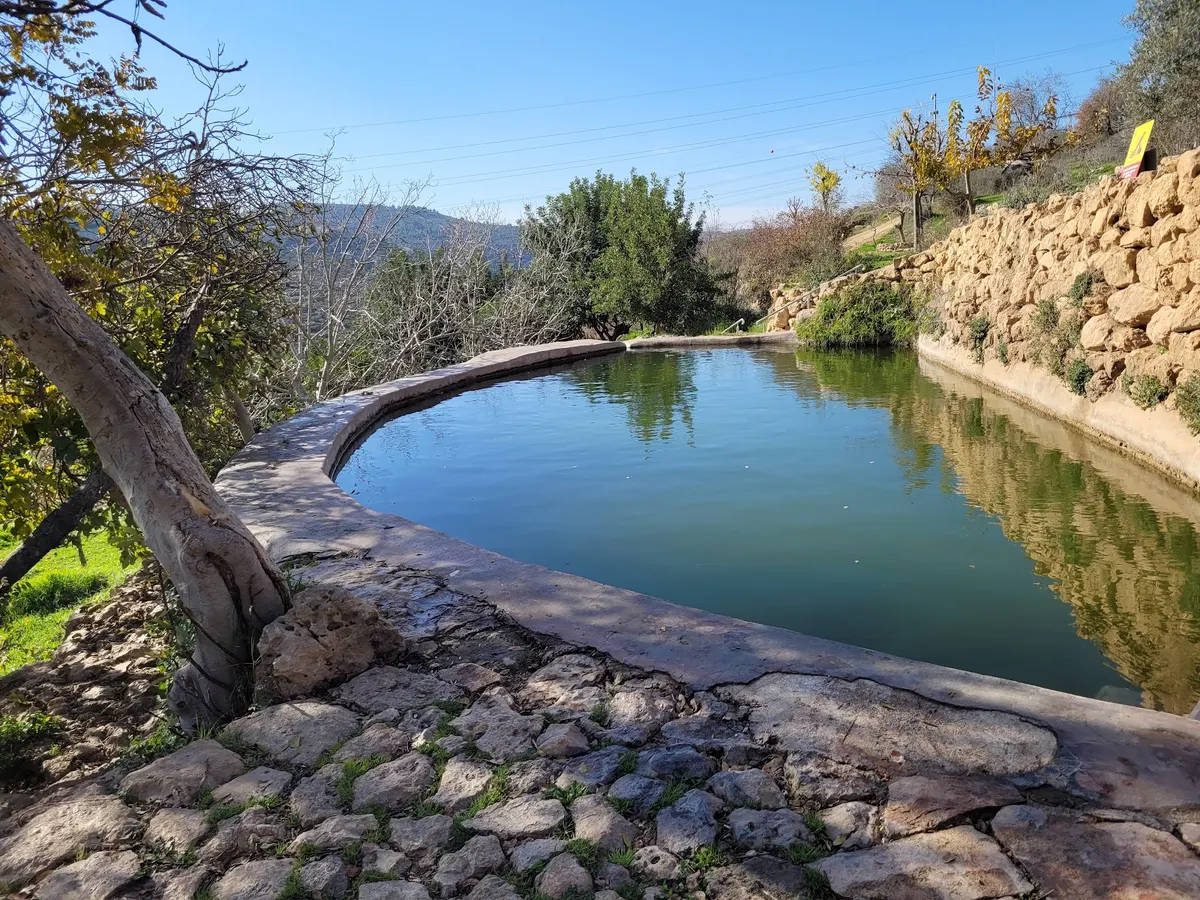
All information about Ein Lavan: Ein Lavan originates in the areas of the Ein Rafaim Stream National Park in Jerusalem. The spring's source drains from a short culvert through a channel into a large, beautiful man-made pool measuring 4x8 meters, with a water depth of about 1.5 meters. In recent years, Ein Lavan has undergone many changes as part of a long restoration process. The site was declared a national park, and since then terraces and steps have been restored here, trees and herb plants were planted, access paths were arranged, the water pools and channels used to irrigate fields were restored, and in addition, another pool for little children was inaugurated. In the heat of late July, what does a person need more than a fig tree, an almond tree, a pool with water and a bit of greenery? Maybe a watermelon. The spring was used by the residents of the village of Walajeh, which was located on this side of the Ein Rafaim stream until 1948, until it was moved by the Jordanians to the other bank. Today, the spring is named after the White Ridge where it rises (which itself is from light-colored chalk/limestone rock that is common there). White Ridge is part of the Shorak Ridge—one of the ridges extending westward from Jerusalem into the lowlands (on the other side of the ridge, many springs rise; some of them can be seen on the route of Khirbat Sa'adim and the Nakan Waterworks springs in the Jerusalem Hills). In the area of the spring, burial systems dating to the Iron Age and the Second Temple period were also found. Additional (and less well-known) names for Ein Lavan are Ein Olilik (raspberry) and Ein Aguzim (named after a small grove of royal walnuts planted nearby). South of the spring, you can see the channel of Ein Rafaim Stream and the railway line. There's nothing like a dip in a cool spring on a hot day. Did you know that Ein Lavan is on the Israel Trail? See how Yonely Pelag combines swimming in a spring while walking on the segment from Jerusalem to Eilat? Note: Near the steps leading to the spring, there is a trash bin collection area, and the waste is removed from it only. Please keep the place clean and dispose of your trash in the container. Lighting bonfires on the site is prohibited. The spring is very well known, so it is crowded on weekends and holidays. It is recommended to try to arrive at less busy times, and a visit in the early morning hours will ensure you can enjoy the spring more intimately. The route to reach Ein Lavan is via the parking lot of the Biblical Zoo. The dirt road leading from the zoo to the spring is called the Nadav Road, named after Nadav Eilad, a fighter in the Paratroopers' course-branch (Pluga'n) "Tzanhanim" who was killed during operational activity in Hebron. Nadav's family maintains the road and the pool in his memory. The Biblical Zoo The Biblical Zoo is one of the leading and most popular in the list of Jerusalem sites. It presents each animal in a unique way alongside sources from the Bible that discuss it—hence its name. You can also meet animals that have become extinct from the landscapes of the land, and are planned to be returned to nature, such as the Persian fallow deer and the aurochs (Arabian oryx). The zoo began its journey in 1940 as a small animal corner on Rav Kook Street in Jerusalem, and in 1947 it moved to Mount Scopus, but due to the suffering caused to the animals during the War of Independence, it was transferred to the Romema neighborhood. It was located there for about forty years, until in 1993 the current zoo opened. For more information, see the page of the Biblical Zoo on the "Tiulei" site."
Tags
More activities in Jérusalem
Need help planning your activities?
Our French-speaking team helps you plan your stay in Israel, with personal advice, reservations and transfers.