Sedom Hill Viewpoint
תצפית הר סדום
About
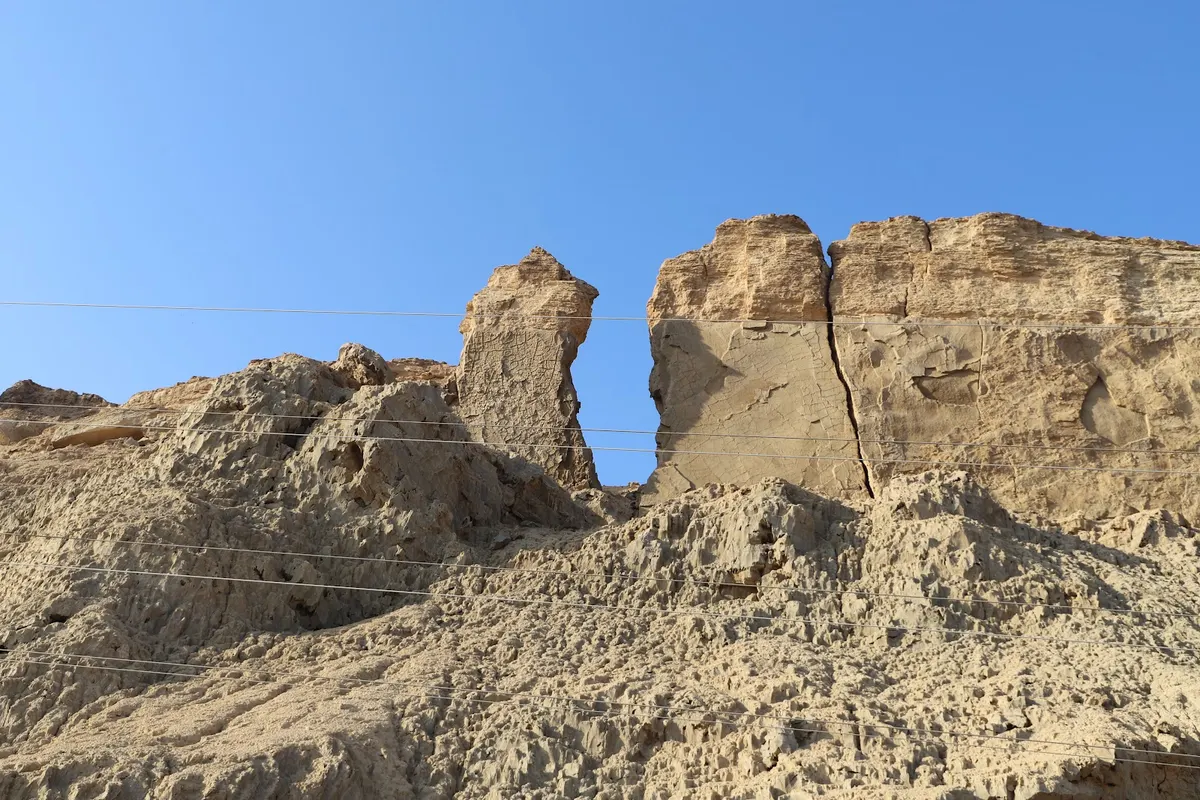
All the information about the Sedom Hill viewpoint Access to the viewpoint is suitable for any vehicle, and climbing to the very summit requires only a short on-foot walk. From the summit you can admire the standing mass of salt, and opposite you the view of the southern salt pools will be reflected. Looking west, you can see the escarpment from which both Nahal Peratzim and Nahal Ami'ez emerge. Looking east will reveal to you the border between the mountains of Edom and the mountains of Moab—namely Nahal Zerd, which is the Zared Stream of the eastern Jordan. The geological story—when you stand on Mount Sedom, in fact you are standing on a hill of salt—a unique and rare phenomenon in the world. Mount Sedom is about 11 km long and about two km wide. So how was the hill formed? Five million years ago, waters of the Mediterranean Sea entered the Dead Sea through the Jezreel Valley and formed the Sedom Lagoon. At this stage, salt rocks thicker than more than two kilometers sank into the Dead Sea. At a certain point, the connection between the Mediterranean Sea and the Dead Sea was severed; the Dead Sea became an inland, dry lake similar to what we know today, but on a far larger scale. The Dead Sea extended until about 14,000 years ago—from the Jordan Valley to the settlement of Hazeva in the Arabah. This is the famous "Lashon" (tongue-like) bay. At this stage, additional sedimentary deposits of lake sediment—salt rocks—continued to settle on top of the salt layers. One of them is the Lashon Formation that makes up the Ami'ez plateau and Nahal Peratzim—below this layer there are kilometers of salt layers. And how did Mount Sedom suddenly rise up? Well, salt has a special property. When it is compressed from above (in this case by sedimentary rock layers), it becomes viscous, and slowly it manages to rise through the many cracks of the rift. This phenomenon is called a diapir. This is how we have, from the side of Sedom, a vertical slab that every year adds to its rising by 6–9 mm. The dry climate in the Dead Sea region preserves it from erosion, because salt dissolves much faster than limestone. In Sedom there are hundreds of kilometers of vertical and horizontal tunnels that were created following the dissolution of the salt by the waters, leaving behind a cave of Lot's wife (also called Sedom Cave). Trip to the cave of Lot's wife in Sedom | Photo courtesy of: eXteriorate
Tags
Need help planning your activities?
Our French-speaking team helps you plan your stay in Israel, with personal advice, reservations and transfers.