Hariton Cave
מערת חריטון
About
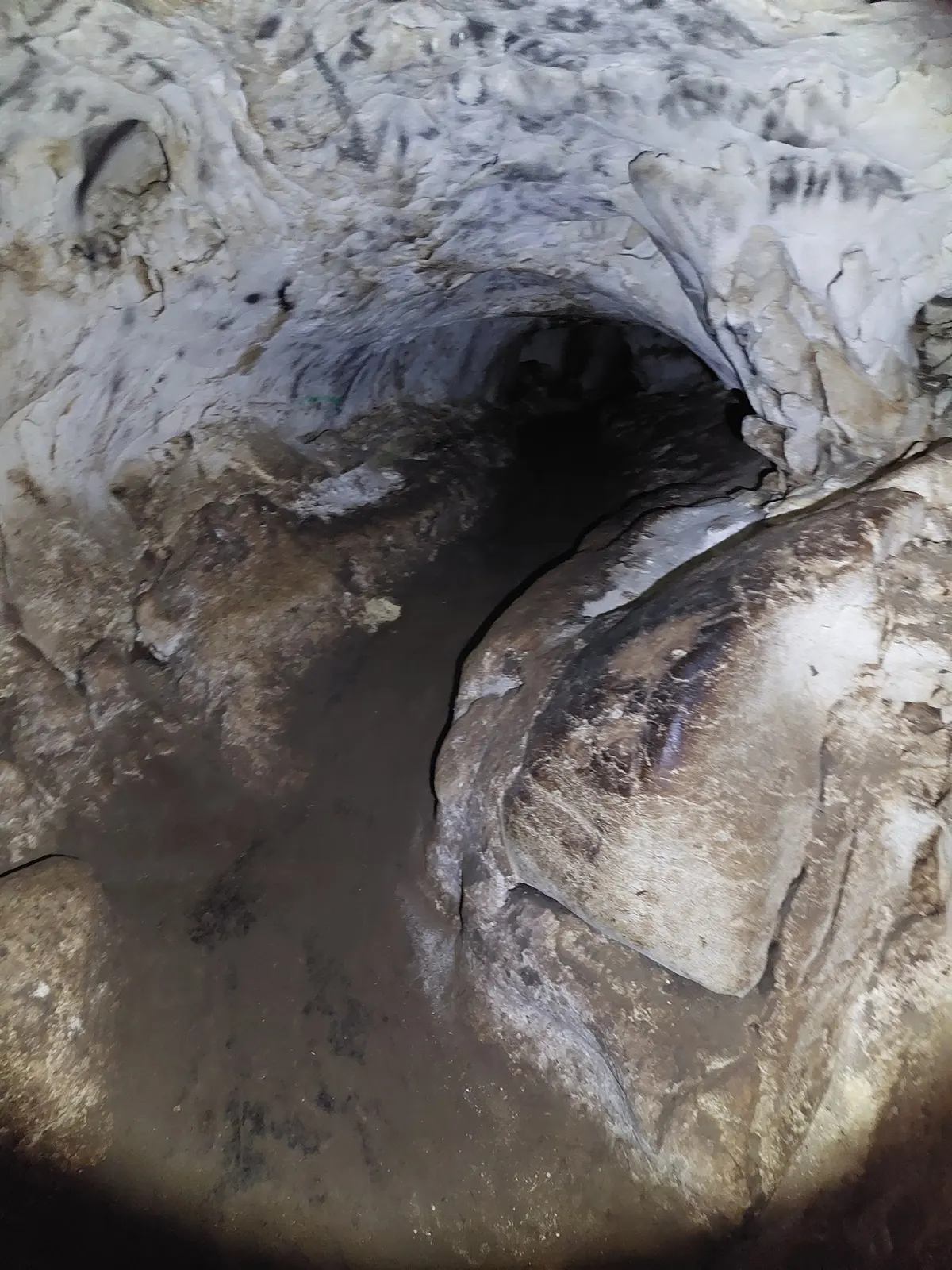
All the information about Hariton Cave in the Desert is not a preferred place for human habitation. With no water and sparse vegetation, the desert serves as living quarters for the persecuted. King David's wanderings in the Judean Desert are detailed in the Book of Samuel II and in the Psalms of David. Even the prophet Amos was expelled from Bethel after he angered King Jeroboam with his harsh prophecies (Amos, chapter 7): "Then Amaziah the priest of Bethel sent to Jeroboam king of Israel, saying, 'Amos has conspired against you in the midst of the house of Israel. The land is not able to endure all his words. For thus Amos says: "By the sword Jeroboam shall die, and Israel shall surely be exiled from their land."' And Amaziah said to Amos, 'Go, O seer, flee away to the land of Judah, and there eat your bread, and there prophesy. But in Bethel you shall not continue to prophesy anymore, for it is the king's sanctuary, and it is the royal house.'" Where did Amos go? To the desert (there, chapter 1), and thus he opens his book: "The words of Amos, who was among the herdsmen of Tekoa." In a later period, people from different sects fled to the desert, as did rebels. They lived in Qumran, at Masada, at Herodium, and in caves in Nahal Mishmar, among others. The Judean Desert is sufficiently isolated, yet also close enough to be convenient for living for these people. At the beginning of the fourth century, a Turkish pilgrim named Hariton arrived here and established a movement of monks who tried to imitate the earliest Christians—who were persecuted and lived in the desert. Hariton lived in Nahal Perat; later he moved to Nahal Tekoa, and from there returned to Nahal Perat, where he died and was buried. The monks of his movement lived in nearly complete seclusion: they sat alone in caves and met only once a week, mainly to receive food supplies and the like. The places where the monks lived are called "Mevoded" ("a dwelling in isolation," from the root B-D-D) or "laura"—"a way" or "corridor" in Greek—named for the passage between the different lauras. The cave in which Hariton secluded himself is not the cave shown in the first picture, but is located slightly to the east of it—yet it was דווקא this cave that was named after him. In the immediate vicinity there are remains of monasteries, lauras, and water reservoirs from the Byzantine period. Hariton Cave's limestone is subject to the impact of water that strikes it and dissolves it—a phenomenon known as "karst" (named after the Karst region in Slovenia, famous for its spectacular karst phenomena). There are many kinds of karst formations: a chimney, a cave, a doline, a rock column, and more. What they all have in common is the dissolution of the limestone by contact with water. The phenomenon of stalactites occurs when the rock is in a dry area and water seeps into it, forming a cave in which stalactites grow. The walls of these cavities are rough because the dissolution is not uniform. The most famous karst cave in the country is the stalactite cave near Beit Shemesh, and the famous column is the one on the descent of Nahal Amud. There are also karst phenomena that occur when the rock lies beneath the water's surface. In that case, no stalactites form—only cavities in the rock—and the cavity walls are smooth to the touch. Such is Hariton Cave, the second-largest cave in the country (after Sedom Cave), which was formed when the area was covered with water. Hariton Cave is about 3,500 square meters in area. Its depth from the entrance to the farthest point is 400 meters; however, this is not a direct distance, but rather a tangle of caves, chambers, passages, and crevices—resulting in a total walking distance of about 4.5 kilometers. The cave has 55 rooms of differing sizes. They are on different levels, and the route between them changes from place to place. Most people enter the cave up to room number 6; those who are especially strict in observance continue on to room number 9. There are other options, but only for professionals. Note for the tour in Hariton Cave: The cave entrance is forbidden without an authorized guide who knows the cave, is equipped with a map of the cave (a cave map is different from a terrain map and its markings must be known), and knows how to supervise the group and ensure at every moment that no one has gotten lost or been left behind. The Kfar Etzion Field School holds cave tours from time to time, and it is recommended to check with them when they take place. In the parking area above the cave (see directions for getting there), you will see a large Byzantine water reservoir, and around it remains of lauras and caves in which monks lived. You can identify the cave's opening by the two huge rocks next to it, which resemble the Tablets of the Covenant. Room number 1 is the entrance to the cave. From there you must crawl through a narrow, winding passage (also dusty and strewn with stones—not the most comfortable for your elbows and knees) to room number 2. From there, turn right to room 3 and descend by iron steps to room number 6. This is a large room where people are accustomed to sitting quietly in the dark and listening to the cave's story. Anyone who wants to continue to room 9 should climb the ladder on the right-hand side (when you are inside the cave there is no north and south—only right and left). From room 9 you return by the same route by which you arrived. Every so often there are white arrows marking the route inward and yellow arrows marking the way out. Note: You must take a headlamp/flashlight and spare batteries. Visiting the cave is not recommended for travelers who suffer from asthma or fear of enclosed spaces, and it should be taken into account that the cave's chambers are narrow. There is no cellular reception in the cave, and even a shout for help will not help. Do not enter the cave without an authorized guide. At the dripping spring along the black path, about 100 meters after the transparent split inside the cave, you reach a small and unusual spring whose waters drip from above the rock into a small pool at your feet. You can stand under it, open your mouth, and drink the water drop by drop. It is also pleasant to sit on the rock ledge above the stream, look out at the view, and drink a cup of coffee. For the map of Hariton Cave, courtesy of the Kfar Etzion Field School >> Additional tours in the area If you are already in the vicinity, don't skip a visit to Herodium National Park and a trip to the wildflowers (tulip-like/"halomonyot") near Ma'aleh Rechavam, which bloom in the months of October–November.
Tags
Need help planning your activities?
Our French-speaking team helps you plan your stay in Israel, with personal advice, reservations and transfers.