Ein Kedem and Nahal Nedar
עין קדם ונחל נדר
About
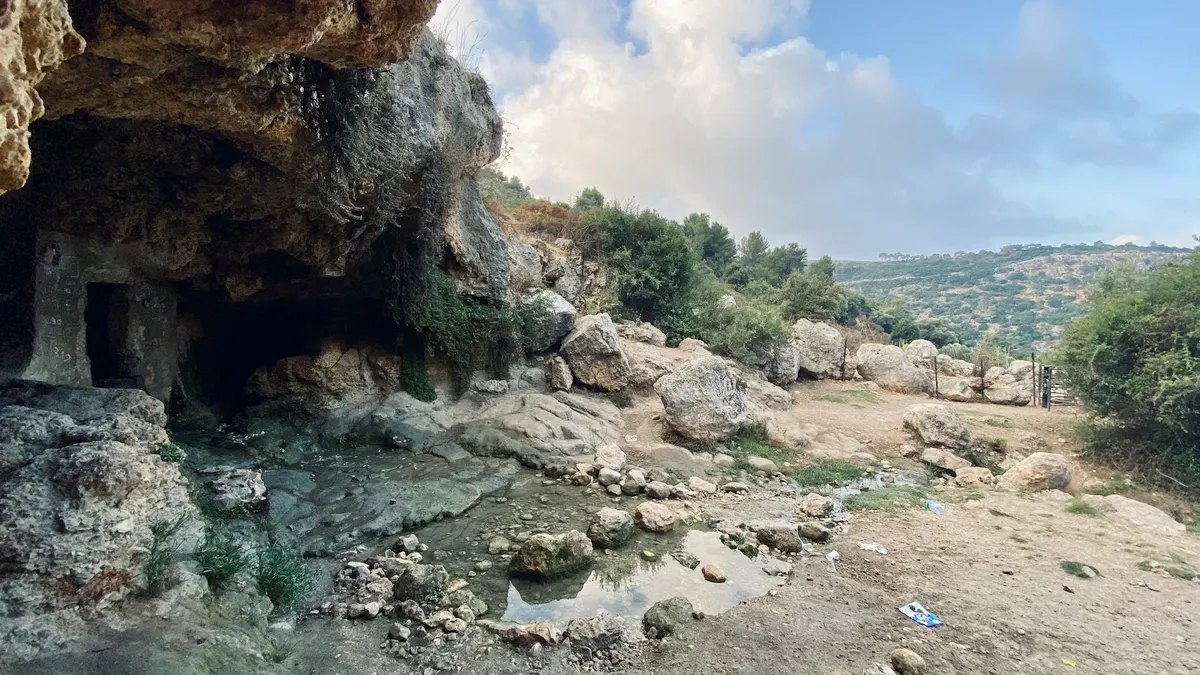
A stream called Naḥal Nedar and Ein Kedem along the hiking route in the Naḥal Nedar streambed: on the way you will encounter the lovely spring of Ein Kedem. Of the three springs that well up from the side of the hill and the streambed—Ein Nedar, Ein Kanim, and Ein Kedem—the last is the only one that is plentiful all year long, and besides the spring itself, you can also see at the site the two basins from which it flows. Whether you reach the spring from the Telalim parking lot or from Atlit Castle, the path will be accompanied by a somewhat tangled and young woodland, like many of the routes in Mount Carmel. Down the Naḥal Nedar you can also see the remains of water channels (aqueducts), which the residents used to irrigate their olive groves by the stream's outflow into Naḥal Galim. The hike on this route is not circular, and it can be reached from Naḥal Galim, from Atlit Castle, or from the parking lot area of the Haifa University and the Telalim parking lot. Two recommended options are before you: a short linear route of 4.5 kilometers downhill along Naḥal Nedar from the parking lot of the Telalim parking area to Atlit Castle. From the starting point, you should set out with the Black Trail marking that is right next to the entrance to the parking area (when entering the parking lot, turn right; then you will notice the wooden sign and the marking—see the photo). A long linear route of 9 kilometers that includes walking in Naḥal Lakh and Naḥal Galim. The route starts at the Damon junction (parking point 1) and ends at the Telalim parking lot (parking point 2) after an ascent in Naḥal Nedar and a visit to the spring (this route also requires two vehicles) | For the full route in Naḥal Lakh and Naḥal Galim " Walking in the water tunnels of Ein Kedem with the help of a flashlight, you can enter into two basins: the right one is the simpler tunnel; the water there usually reaches a height that is between knee level and the level of the pelvis, and after walking about 15 meters inside, you reach a point where the water bursts out of the rock. It seems that this tunnel was carved during the Roman period, and was used to increase the spring's flow. Near the black trail leading to the spring, you can also see the remains of a water channel that at the time conveyed the water toward Atlit Castle. The entrance to the second basin is a bit more complicated—the second tunnel is blocked by a concrete wall that allows pumping the spring water with a large pipe. In the wall there is a small window through which you can squeeze into the tunnel, where the water is deeper and your whole body gets wet. It is longer and is highly recommended for adventurers. If you chose to visit this tunnel, pay attention to the many concretions in its ceiling, which are a remnant of a sea that was once here and created the limestone rock into which the spring is carved.
Tags
More activities in Haïfa


Need help planning your activities?
Our French-speaking team helps you plan your stay in Israel, with personal advice, reservations and transfers.