Nahal Na'aman Stream Trail
שביל נחל נעמן
About
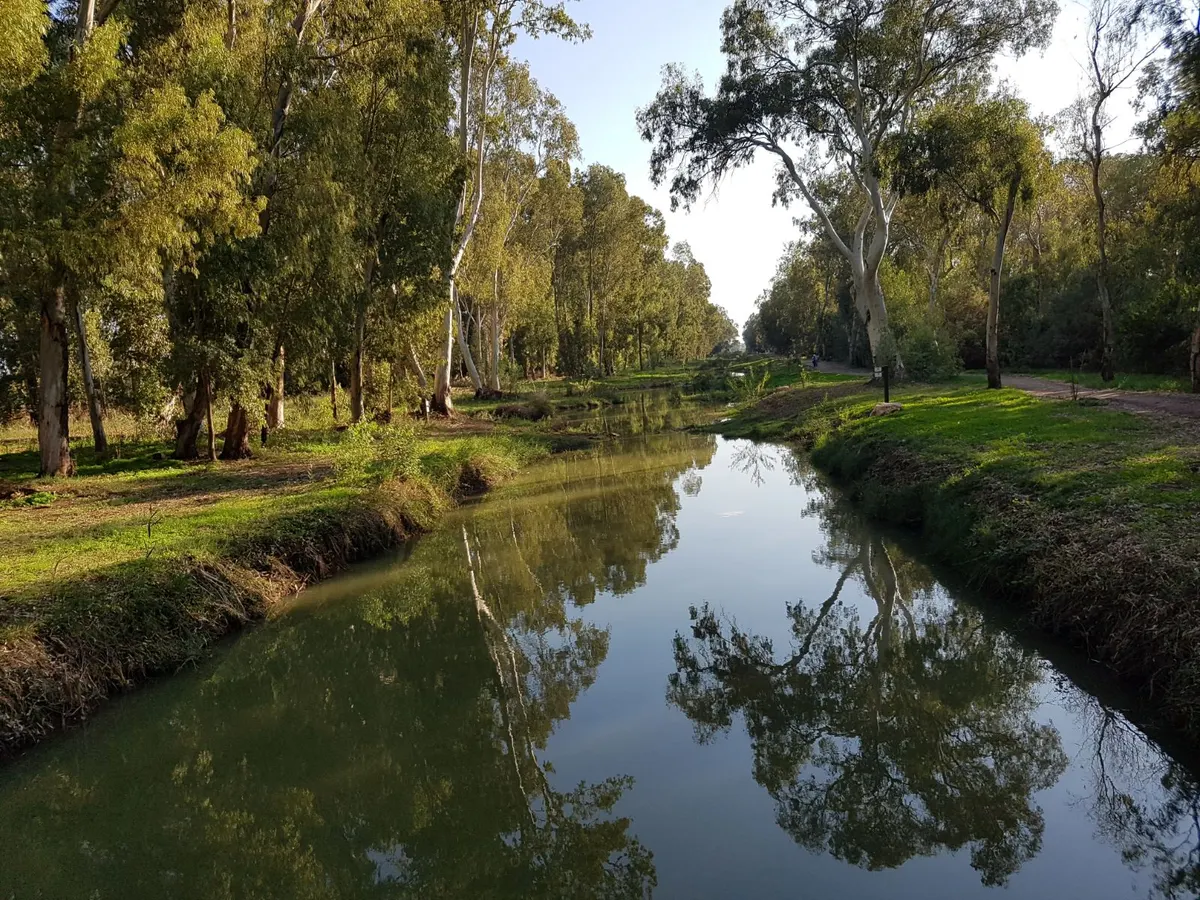
All information about Nahal Naaman trail. The name of the stream comes from the Arabic name "An-Na'im," meaning "invitation." According to a local legend, when the Prophet Muhammad passed through the land, most streams refused to let him cross—and only Nahal Naaman invited him to continue on his way. In the past, enormous quantities of water flowed down the stream—about 5,000 cubic meters per hour—from the Ein Afek springs at the foot of Tel Afek, an area that was entirely swampy. Due to the gentle gradient and the short distance from the sea, the stream was forced to flow along a path three times longer than required. This created huge swamps around it—a habitat for Anopheles mosquitoes that carried malaria. To enable agriculture and prevent flooding, in the 1920s and 1930s the area began to be drained. The JNF (KKL) purchased the lands, and the first kibbutzim in the area—Kfar Massarik, Ein HaMifratz, and Afek—channeled the streams into canals and created faster flow. In 1942, the spring waters were even diverted for industrial use in the Haifa Bay, and the swamps became fields and fish ponds. Today, what remains of the swamps is protected by nature reserves—Ein Afek Reserve, Ein Ninfet Reserve, and Nahal Naaman—preserving the stream's flora and fauna. In recent years, and especially since 2007, the stream has been restored as part of a large-scale project by the JNF (KKL), the Authority for Western Galilee Stream (Rashut Nahal Galil HaMevush?), and additional bodies. The stream was deepened, enormous amounts of silt were removed from it, and old pollution hotspots were also treated, such as landfills. Paths, bridges, tables, and benches were built, and its surroundings became a green park suitable for walking, cycling, and a relaxed stroll beside flowing water. The water sources were also restored: drilled well water is pumped back into the Ein Afek reserve, and from there into the stream. To these are added water from fish ponds and agricultural drainage—so the stream is becoming a perennial stream again. Walking route along the stream: distance: about 1.3 km (each direction). Access points: south (via Kiryat Bialik) or north (near Kfar Massarik). Who it's suitable for: families, strollers, relaxed walking. The path is paved and accessible, including seating areas, shelters, and bridges. The walk starts from the south parking area, right next to the Road 22 bridge. A comfortable path leads through a large eucalyptus grove and a water channel (Channel 42), until the point where it meets Nahal Naaman. Here you'll find a small wooden bridge leading to an observation shelter, from which you can see the stream's rich vegetation—juncus (Gom'a), saw-like reed (Sof Misuy), and large reed (Shinit Gedola). Further along the trail you'll reach a metal observation shelter with explanatory signs. If you're lucky, you might see the soft turtle—the giant water turtle, which may weigh up to 50 kg. The Nature and Parks Authority will stock the stream with mature individuals, in the hope of establishing a new local population. In the stream you can also swim with the "Lebanon of Yarkon" (Lebanon fish)—a rare fish that is almost extinct and found only in coastal plain streams; tilapia (Amnon); and also enormous catfish that reach a length of one meter or more. Further along you'll reach a main bridge leading to the right bank. Here you'll find a large grove with picnic tables, plus an additional walking segment about 700 meters long. Among the prominent plants you'll see the European wolf's-bane (a white flower with a tall stem) and the pointed henbane (Hank Maḥudad), a poisonous but spectacular climber that specifically attracts the endangered Danaus (Sedom) butterfly. At the end of this section you'll reach another small bridge, a play facility, and two picnic tables. Further along you'll find the northern bridge, which is currently not passable. If and when the Ein Ninfet Trail is completed, it will be possible to continue from there northward to the nearby reserve.
Tags
More activities in Haïfa

Need help planning your activities?
Our French-speaking team helps you plan your stay in Israel, with personal advice, reservations and transfers.