Ein Hania
עין חניה
About
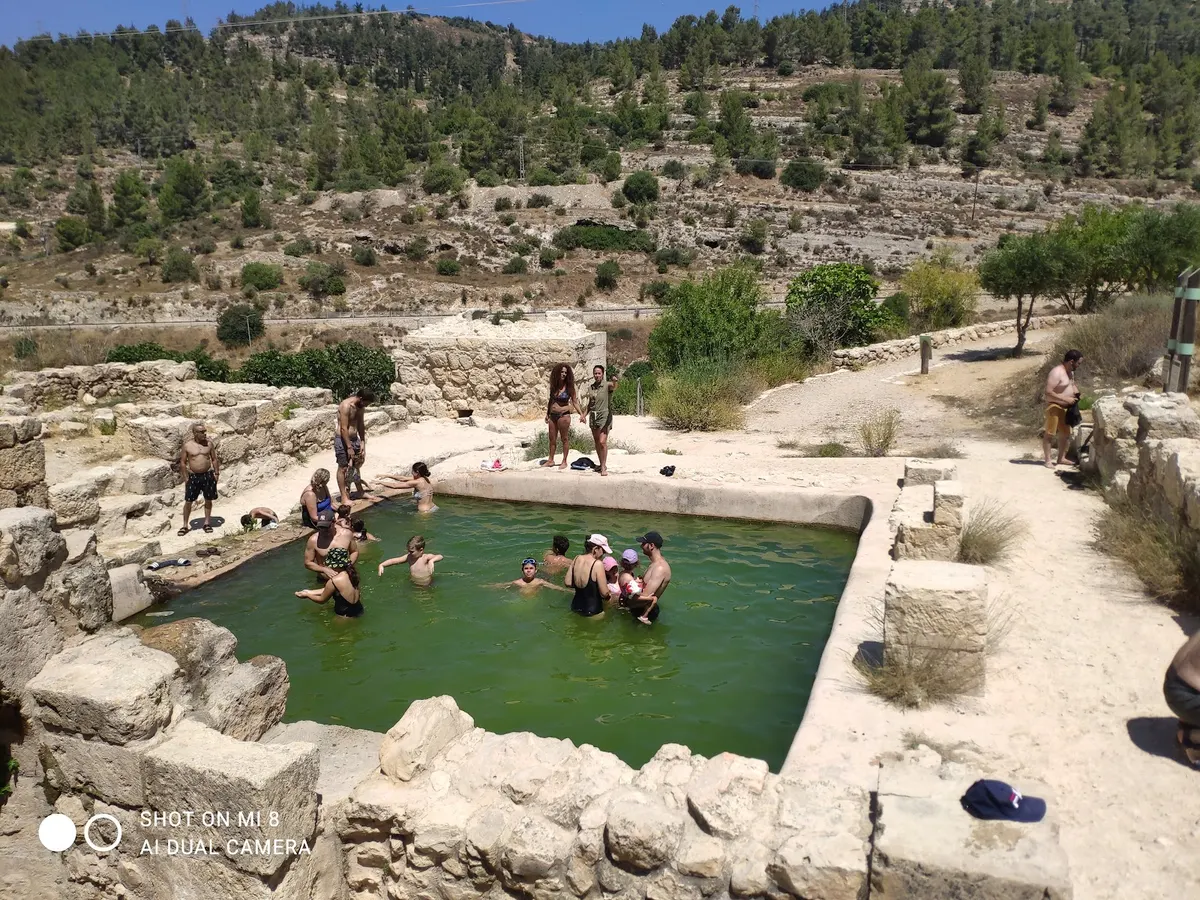
All information about Ein Hania Preservation and development work by the Nature and Parks Authority, the Jerusalem Development Authority, and the Antiquities Authority led to the opening of the Ein Hania site in Nahal Refaim within the Yehuda Hills National Park. Archaeological finds at Ein Hania Archaeological excavations by the Antiquities Authority uncovered a water system, considered one of the most impressive in Israel. Two water pools from the Byzantine period and a nymphaeum (water fountain) from the Roman period were found on site. Even today, you can enjoy the view of the waters filling the pools and making their way from the spring. How does this happen? The spring bursts from rock-cut channels in the stone; from there the water flows into a short aqueduct, continues along its course over an arch, and finally descends into the channel built along the edge of the pool, reaching the upper pool. Want to splash your feet in the water? Thanks to the Nature and Parks Authority's maintenance of a low water level, even children can splash here happily. And if you consider yourselves sporty types, you're invited to test your strength with an underground crawl along nine meters in the channel—from the spring to the pool. West of the pool, remnants of a structure can be seen, probably used for residential purposes; east of it, remains of a colonnade base led the researchers to conclude that the pool may have been used for decoration, bathing, or religious ceremonies. Next to the upper pool, the nymphaeum—a water fountain—was found at the site. The waters of the upper pool drained through a network of channels into a wall about 2.5 meters high, whose center is shaped like a half-arch. In the center of the wall is a niche, and the spring water flows beneath the niche into the lower pool. The fountain's appearance is complemented by a relief with a Corinthian-style capital on each side. During the Byzantine period, the nymphaeum was incorporated into the structures of the site, and it may have been used by the church that operated there. Today, the remains of the church cannot be seen. One of the most notable finds discovered at the site— a fragment of a column capital in Greek style, typical of the buildings and estates of the kings of the First Temple period—and a rare coin, a drachma, which the Greek rule stamped in Ashdod between 420 and 390 BCE. Agriculture, briefly Old terraces also underwent a restoration process, and orchard trees were planted in them. Further restoration work on the terrace of traditional agriculture is planned. Did you know? Ein Hania is a sacred place and a pilgrimage site for believers of the Armenian Church and the Ethiopian Church. The area surrounding the pool and the nymphaeum is the property of the Armenian Church. Please respect the site. Useful information Opening hours: Summer time: Sunday–Thursday and Saturday, 8:00–17:00; Friday and eve of holidays, 8:00–16:00 | Winter time: Sunday–Thursday and Saturday, 8:00–16:00; Friday and eve of holidays, 8:00–15:00 | Eve of Rosh Hashanah, eve of Yom Kippur, and eve of Passover: 8:00–13:00; last entry at least one hour before closing time. Arrival to Ein Hania requires prior coordination on the Nature and Parks Authority website. Prices: Adult: 14 ₪, Child: 7 ₪, Senior: 7 ₪, Student: 12 ₪ Site accessibility: An accessible path leads to the visitor center and allows access to the deep pool, the nymphaeum, and the restrooms. Dogs are not allowed. No fires may be lit within the site grounds, and glass utensils may not be used.
Tags
More activities in Jérusalem
Need help planning your activities?
Our French-speaking team helps you plan your stay in Israel, with personal advice, reservations and transfers.